Debt Snowball vs. Debt Avalanche: Which Payoff Method Fits You?
The snowball method targets the smallest balance. The avalanche method targets the highest interest rate. Here is how to compare them without pretending one method fits everyone.
Reviewed July 15, 2026 · 2 minute read
Listen to this article
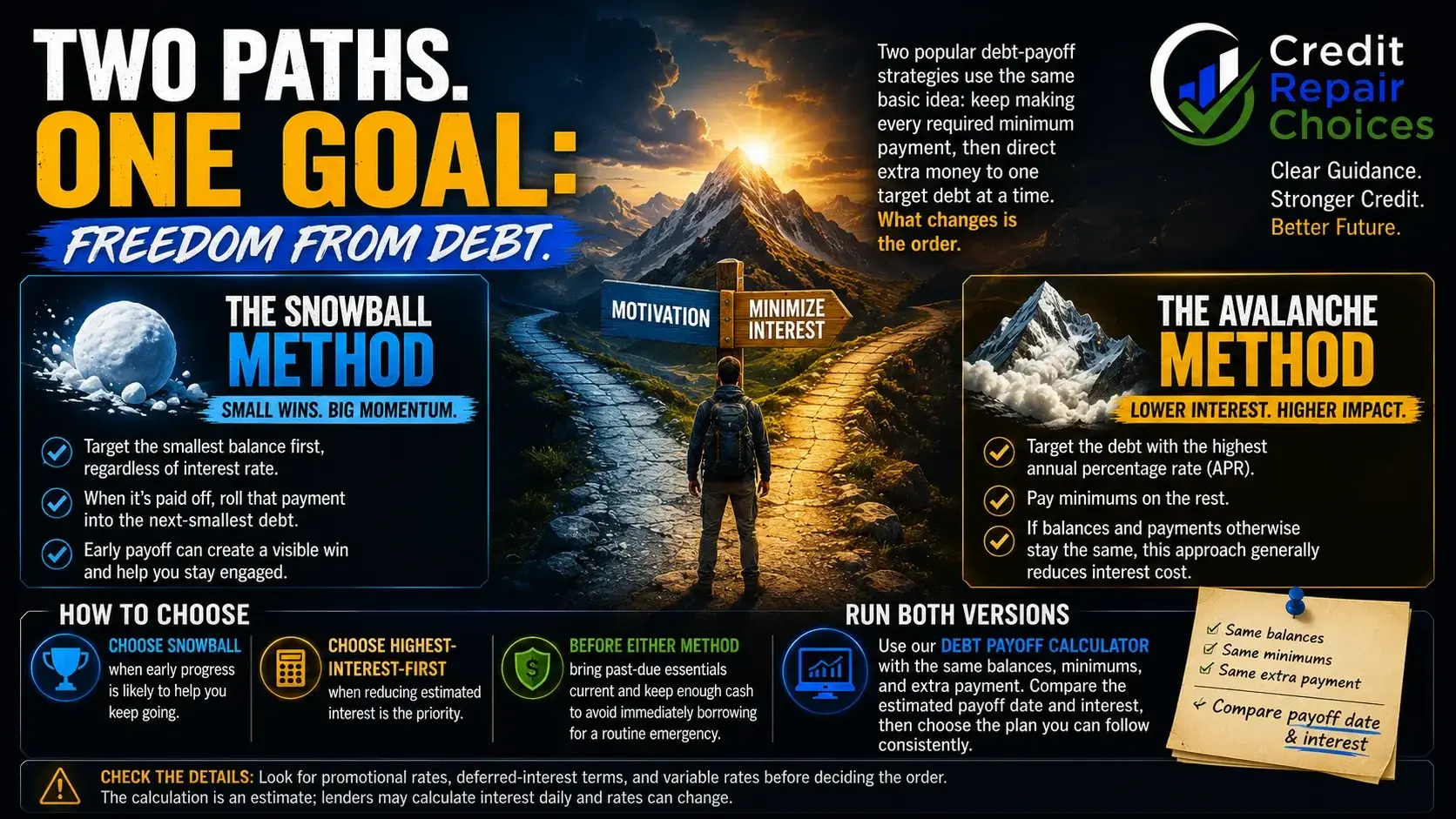
Two popular debt-payoff strategies use the same basic idea: keep making every required minimum payment, then direct extra money to one target debt at a time. What changes is the order.
How the snowball method works
With the debt snowball, you target the smallest balance first, regardless of interest rate. After that balance is paid, its former payment rolls into the next-smallest debt. The early payoff can create a visible win and may help some people stay engaged.
How the avalanche method works
With the debt avalanche, also called highest-interest-first, you target the debt with the highest annual percentage rate while paying minimums on the rest. If balances and payments otherwise stay the same, this approach generally reduces interest cost compared with choosing a lower-rate balance first.
How to choose
Choose snowball when early progress is likely to help you keep going.
Choose highest-interest-first when reducing estimated interest is the priority.
Before either method, bring past-due essentials current and keep enough cash to avoid immediately borrowing for a routine emergency.
Check for promotional rates, deferred-interest terms, and variable rates before deciding the order.
Run both versions
Use our debt payoff calculator with the same balances, minimums, and extra payment. Compare the estimated payoff date and interest, then choose the plan you can follow consistently. The calculation is an estimate; lenders may calculate interest daily and rates can change.
Join the conversation
Load Facebook comments to read and reply using your Facebook account.
Credit card offers arrive constantly — mail, email, preapproved pitches. Comparing them systematically takes twenty minutes and can save you real money. Here is […]
Secured and unsecured are the two basic families of consumer loans, and the difference comes down to one thing: collateral. Understanding which type you […]
Get a Site Like ThisLaunch a branded publishing engine for your own topic, audience, or niche.
Join the conversation
Load Facebook comments to read and reply using your Facebook account.