
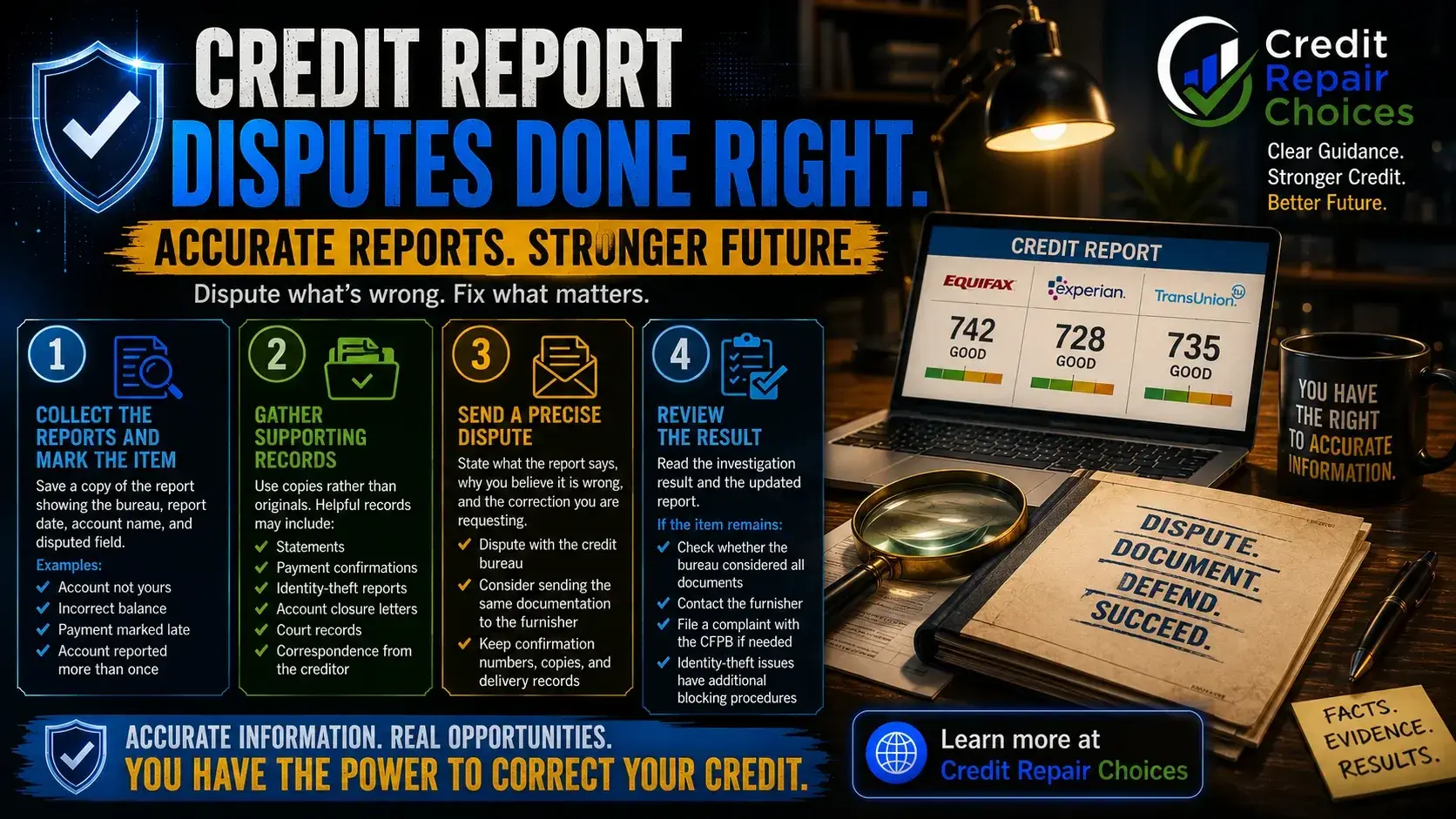
A credit report dispute is for information you believe is inaccurate or incomplete. It is not a request to hide accurate information. A focused dispute gives the credit bureau and the company that supplied the information enough detail to investigate the right issue.
1. Collect the reports and mark the item
Save a copy of the report showing the bureau, report date, account name, and disputed field. Examples include an account that is not yours, an incorrect balance, a payment marked late when records show it was timely, or an account reported more than once.
2. Gather supporting records
Use copies rather than originals. Helpful records may include statements, payment confirmations, identity-theft reports, account closure letters, court records, or correspondence from the creditor.
3. Send a precise dispute
State what the report says, why you believe it is wrong, and the correction you are requesting. Dispute with the credit bureau and consider sending the same factual documentation to the business that furnished the information. Keep confirmation numbers, copies, and delivery records.
4. Review the result
Read the investigation result and the updated report. If the item remains and you still have evidence, check whether the bureau considered all documents, contact the furnisher, or submit a complaint to the Consumer Financial Protection Bureau. Identity-theft issues have additional blocking procedures.


Join the conversation
Load Facebook comments to read and reply using your Facebook account.