
Every time your credit report is looked at, the look itself can leave a mark – or not. Consumer guidance from the FTC and the CFPB draws a bright line between two kinds of inquiries, and knowing which is which stops two common mistakes: fearing harmless checks, and casually authorising harmful ones.
Hard inquiries: tied to an application
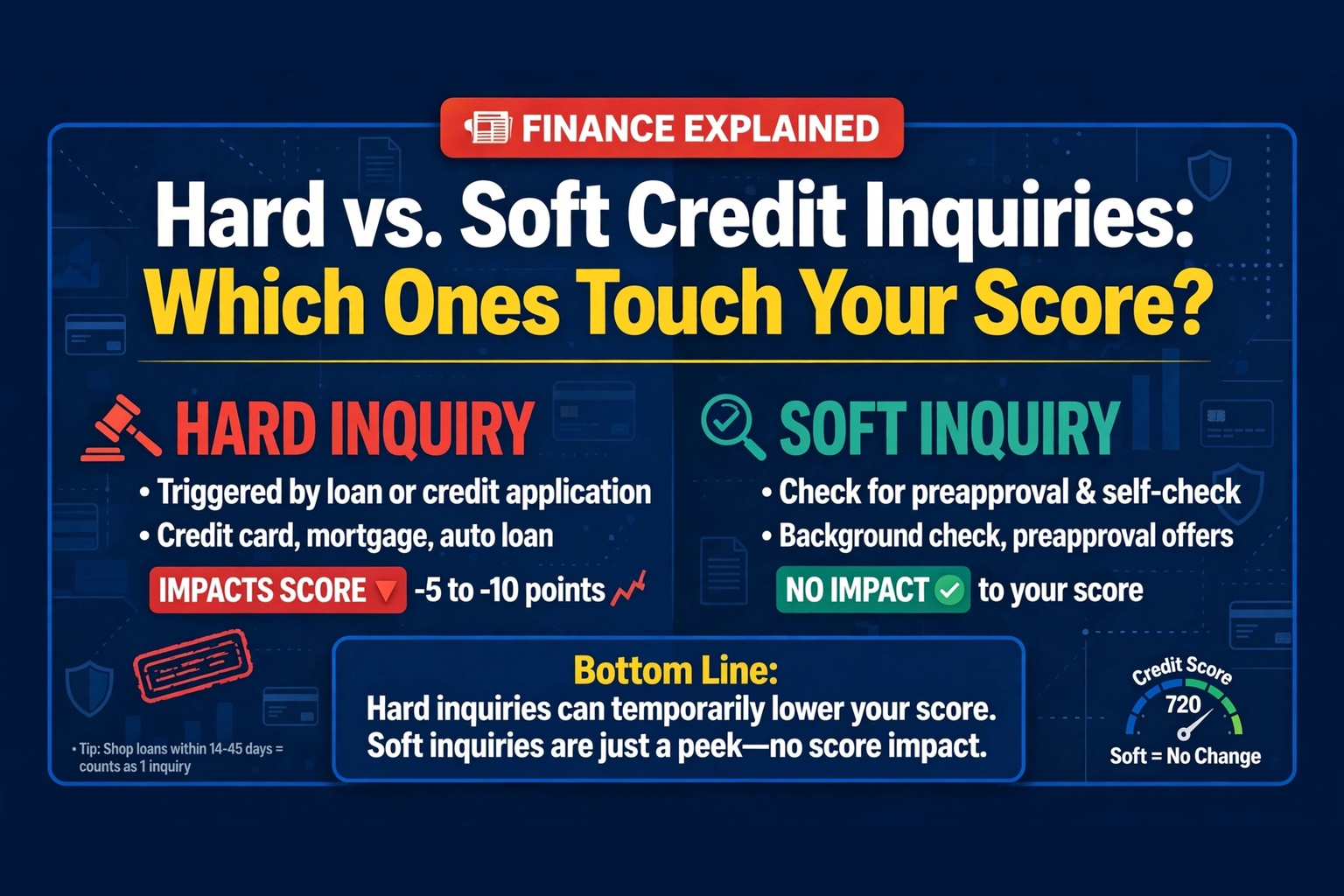
A hard inquiry happens when a lender, card issuer or landlord checks your credit because you applied for credit or a credit-based service. Because it signals new borrowing, a hard inquiry can cause a small, temporary dip in a credit score. Hard inquiries generally stay on a report for two years, though scoring models typically weigh them for a shorter period. One application is a small event; a scatter of applications in a short time reads as risk.
Soft inquiries: no score impact
A soft inquiry is a check that is not tied to a lending decision: pulling your own reports, an employer background check, or a lender looking before mailing a preapproved offer. Soft inquiries do not affect credit scores at all. Checking your own credit – including through the free weekly reports at AnnualCreditReport.com – is always a soft inquiry, and it is a habit worth having, not a risk to avoid.
The rate-shopping exception
Scoring models know that comparing mortgage, auto or student-loan offers is responsible behaviour. Multiple hard inquiries for the same loan type inside a short window – typically 14 to 45 days depending on the scoring model – are generally counted as a single inquiry. The protection applies to rate shopping for one loan, not to opening several different cards at once.
What to do with this
Before any application, ask whether the check will be a hard inquiry and whether you actually want the product. Space out card applications. Read your reports regularly through soft inquiries so a hard inquiry you do not recognise – a possible sign of identity theft – stands out immediately, and dispute errors with the bureau when you find them.
Sources
- Federal Trade Commission: Understanding Your Credit (Consumer Advice)
- Consumer Financial Protection Bureau: Credit Reports and Scores (consumer tools)

Join the conversation
Load Facebook comments to read and reply using your Facebook account.