
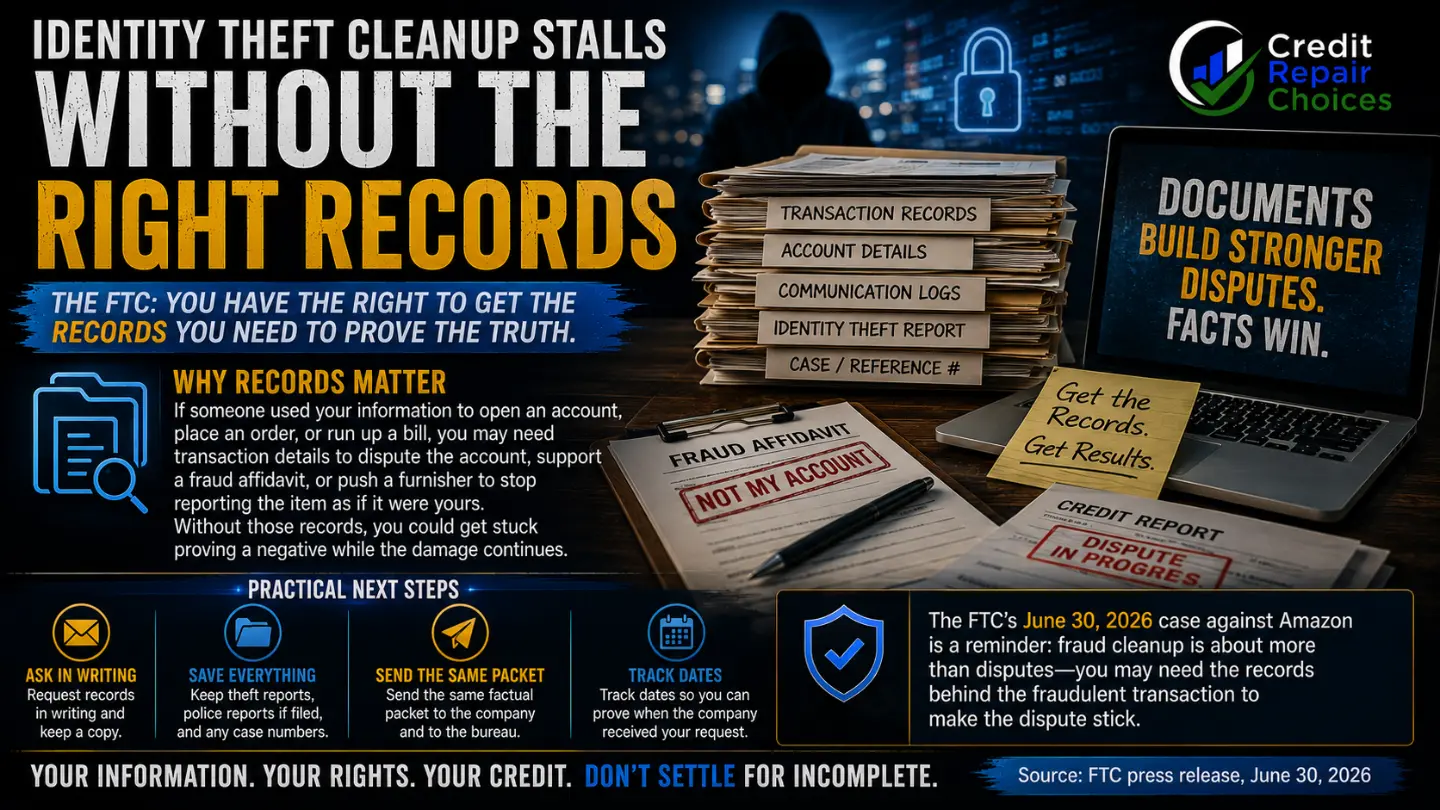
Identity theft cleanup often stalls because the victim cannot get the documents that show what happened. The FTC says those records are not optional when a business is covered by the Fair Credit Reporting Act’s identity-theft record rules.
Why records matter
If someone used your information to open an account, place an order, or run up a bill, you may need transaction details to dispute the account, support a fraud affidavit, or push a furnisher to stop reporting the item as if it were yours. Without those records, a consumer can get stuck proving a negative while collection or reporting damage continues.
Practical next steps
- Ask for records in writing and keep a copy of the request.
- Save identity-theft reports, police reports if filed, and any case numbers.
- Send the same factual packet to the company reporting the debt and to the bureau showing it.
- Track dates so you can show when the company received the request.
The FTC’s June 30, 2026 case against Amazon is a useful reminder that fraud cleanup is not only about disputing a credit report. Consumers may also need the records behind the fraudulent transaction to make the dispute stick.
Source: FTC press release, June 30, 2026


Join the conversation
Load Facebook comments to read and reply using your Facebook account.