
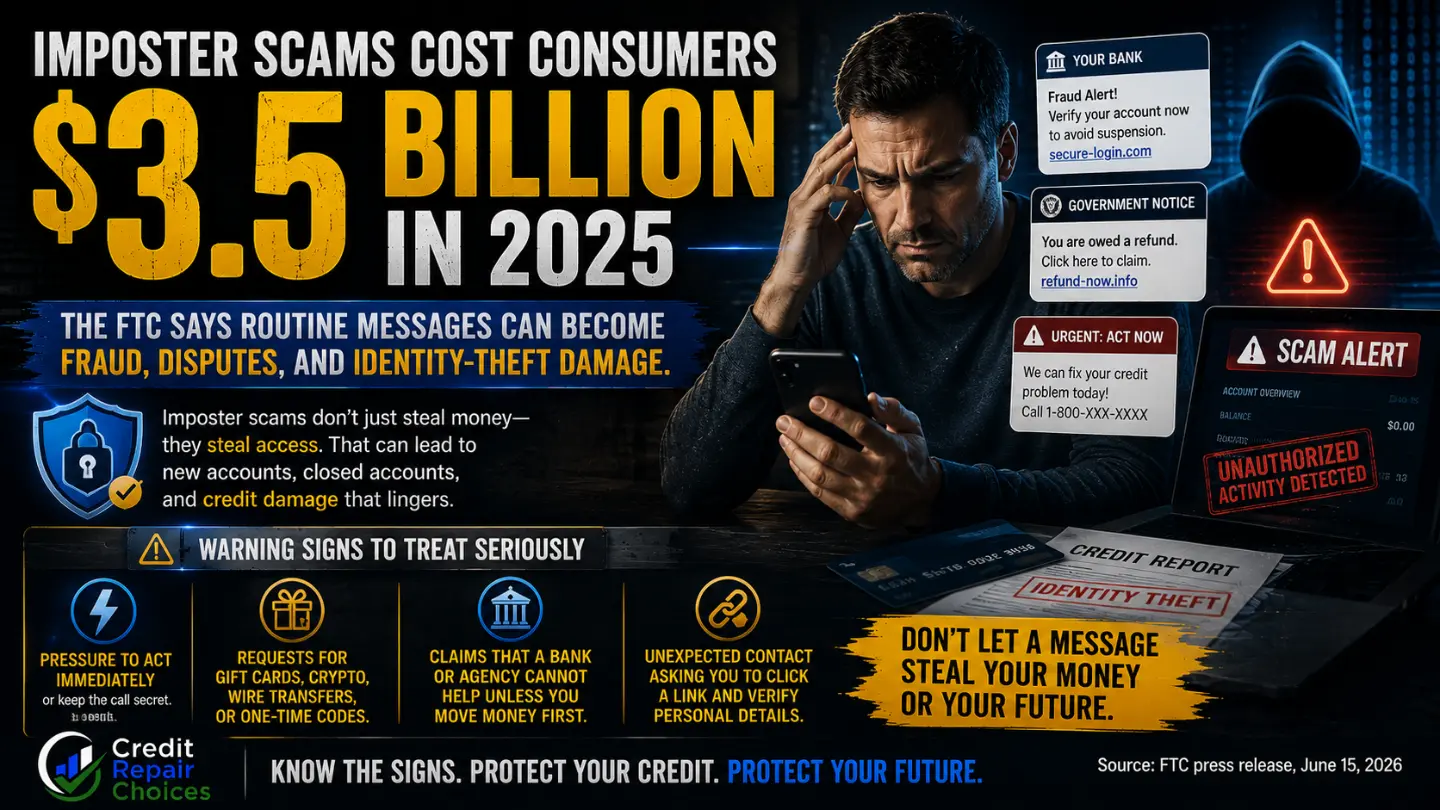
The FTC says consumers reported losing $3.5 billion to imposter scams in 2025. That matters for credit because many imposter scams start with a message that looks routine: a bank warning, a government notice, a fake fraud alert, or a caller claiming to help fix a financial problem.
How these scams become credit damage
Some scams steal money directly. Others collect enough information to open accounts, take over existing ones, or trick someone into revealing security codes and account access. In real life, that can lead to unauthorized charges, account closures, or identity-theft cleanup that lasts much longer than the original message.
Warning signs to treat seriously
- Pressure to act immediately or keep the call secret.
- Requests for gift cards, crypto, wire transfers, or one-time codes.
- Messages that say a bank or agency cannot help unless you move money first.
- Unexpected contact that asks you to click a link and verify personal details.
The FTC’s June 15, 2026 numbers are a reminder that imposter scams are not a side issue. They are one of the fastest ways for a routine message to become a fraud, dispute, or identity-theft problem.
Source: FTC press release, June 15, 2026


Join the conversation
Load Facebook comments to read and reply using your Facebook account.