Listen to this article
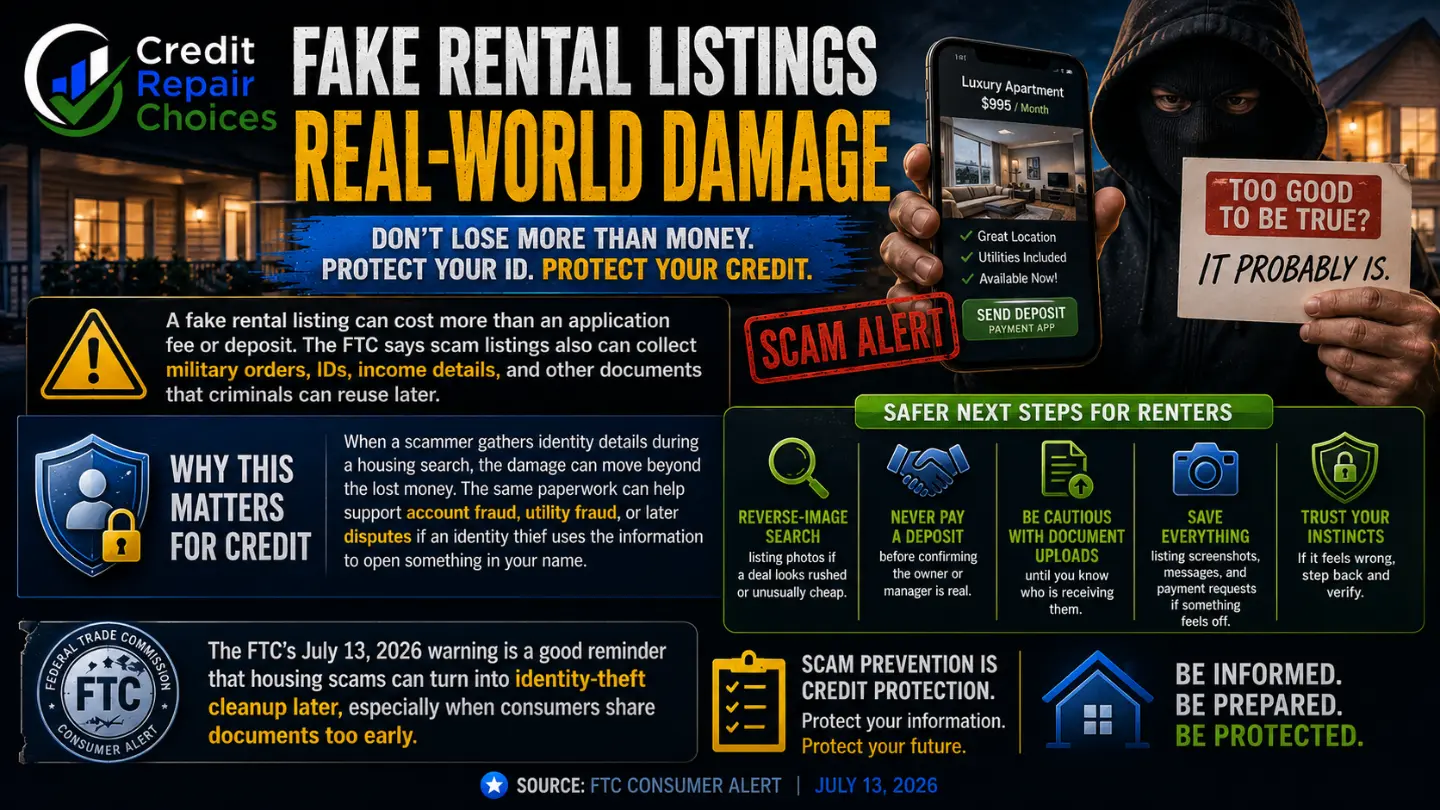
A fake rental listing can cost more than an application fee or deposit. The FTC says scam listings also can collect military orders, IDs, income details, and other documents that criminals can reuse later.
Why this matters for credit
When a scammer gathers identity details during a housing search, the damage can move beyond the lost money. The same paperwork can help support account fraud, utility fraud, or later disputes if an identity thief uses the information to open something in your name.
Safer next steps for renters
- Reverse-image search listing photos if a deal looks rushed or unusually cheap.
- Never pay a deposit before confirming the owner or manager is real.
- Be cautious with document uploads until you know who is receiving them.
- Save listing screenshots, messages, and payment requests if something feels off.
The FTC’s July 13, 2026 warning is a good reminder that housing scams can turn into identity-theft cleanup later, especially when consumers share documents too early.
Source: FTC Consumer Alert, July 13, 2026


Join the conversation
Load Facebook comments to read and reply using your Facebook account.