Listen to this article
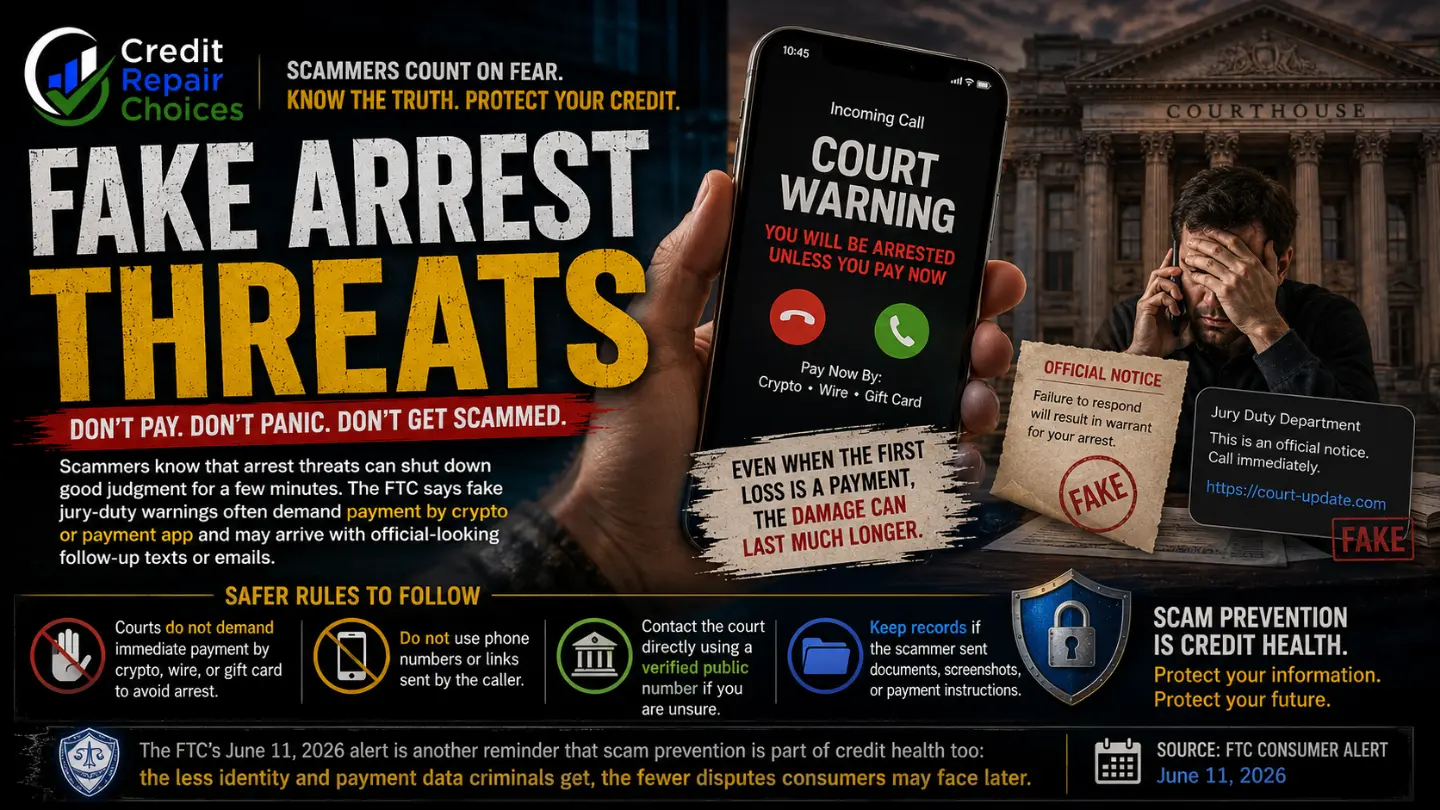
Scammers know that arrest threats can shut down good judgment for a few minutes. The FTC says fake jury-duty warnings often demand payment by crypto or payment app and may arrive with official-looking follow-up texts or emails.
Why credit consumers should care
Even when the first loss is a payment, these scams can also collect addresses, dates of birth, ID details, or other data that help with broader fraud. A consumer who is already stressed about money can be especially vulnerable to a caller who sounds official.
Safer rules to follow
- Courts do not demand immediate payment by crypto, wire, or gift card to avoid arrest.
- Do not use phone numbers or links sent by the caller.
- Contact the court directly using a verified public number if you are unsure.
- Keep records if the scammer sent documents, screenshots, or payment instructions.
The FTC’s June 11, 2026 alert is another reminder that scam prevention is part of credit health too: the less identity and payment data criminals get, the fewer disputes consumers may face later.
Source: FTC Consumer Alert, June 11, 2026

Join the conversation
Load Facebook comments to read and reply using your Facebook account.