When people decide they are serious about paying down debt, one of the first questions is which balance to attack first. Two of the most common approaches are the debt snowball and the highest-interest-first method. Neither one is magic, and neither one changes the amount you originally borrowed. What these methods do is help you choose an order so you can stop making random decisions month to month.
The Consumer Financial Protection Bureau describes both approaches in its debt-reduction materials, and the Federal Trade Commission points consumers back to the basics too: know what you owe, make a plan you can afford, and talk directly with creditors if payments are getting hard to manage. That is the frame to keep in mind. A payoff order is only useful if it fits your real budget.
How the debt snowball works
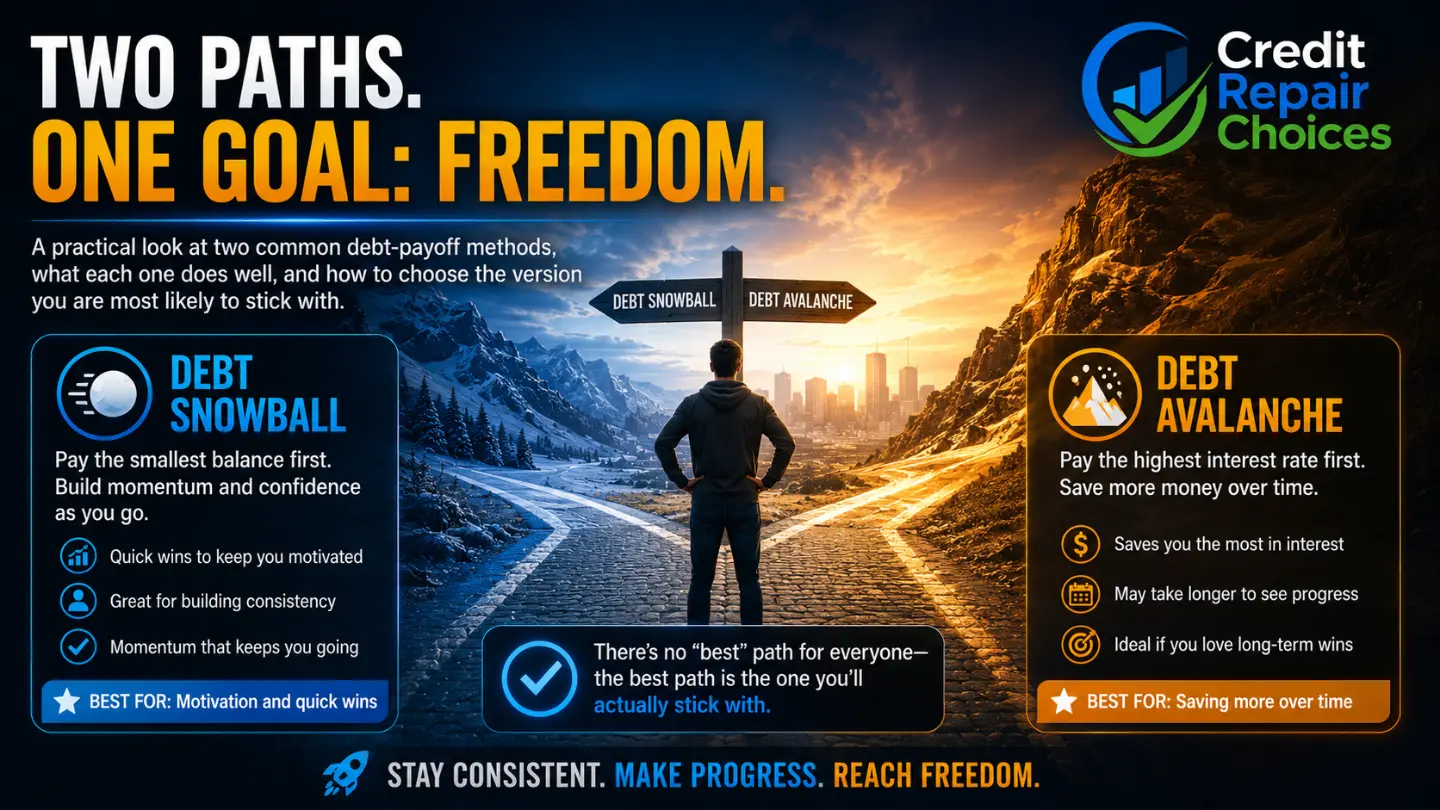
With the debt snowball, you keep making the minimum payment on every account and put any extra money toward your smallest balance first. Once that smallest balance is paid off, you roll that payment into the next smallest debt, and so on.
The main advantage is momentum. Paying off a smaller balance sooner can make the whole plan feel real. If you have several accounts and have struggled to stay consistent, that psychological win matters. Some people are far more likely to keep going when they can point to one balance already gone.
The tradeoff is that the smallest balance is not always the most expensive one. If a larger balance is carrying a much higher APR, the snowball method can cost more in interest over time than a highest-interest-first plan.
How the highest-interest-first method works
With the highest-interest-first method, sometimes called the avalanche method, you still make the minimum payment on every account. The difference is that any extra money goes to the balance with the highest interest rate first.
This method often saves the most money in interest because it targets the costliest debt first. If your goal is to reduce finance charges as efficiently as possible, this is usually the cleaner math. It can also help you see faster progress on the part of your budget that is being consumed by interest.
The challenge is emotional. A high-interest balance may also be a large balance, which means it can take longer before you get the satisfaction of closing an account. If that delay makes you stop or drift, the most efficient method on paper may not be the most effective method for your real life.
What to compare before you choose
Start by listing every debt with four details: current balance, interest rate, minimum payment, and whether the account is current, late, or already in collections. Also note whether the rate is temporary, promotional, or variable. If the numbers are scattered across apps and statements, pull them into one sheet so you can compare them in the same place.
Then ask a more practical question: where is your plan most likely to break? If you keep giving up because progress feels invisible, the snowball may be better because it creates earlier wins. If you stay motivated by seeing interest costs drop, the avalanche may be the better fit.
You should also look for accounts that need special handling before either strategy starts. For example, if you are already behind on a payment, the FTC recommends contacting the creditor right away and asking whether a payment plan or hardship option is available. A payoff strategy does not replace the need to stabilize an account that is already slipping.
What not to ignore while you are paying down debt
Whichever method you choose, keep making at least the minimum payment on every other account unless you have a written agreement that changes those terms. Missing a payment can trigger fees, penalty rates, or additional collection activity. It can also undo the structure you are trying to build.
It also helps to protect a small emergency cushion while you are paying debt down. A plan that sends every spare dollar to balances but leaves nothing for a car repair, medicine, or a utility spike can unravel fast. Even a small buffer can help you avoid adding new debt the first time life gets expensive again.
A simple way to decide
If you want the shortest route to an emotional win, choose the debt snowball. If you want the most interest-efficient route and know you can stick with it, choose the highest-interest-first method. If you are torn, try one method for 60 to 90 days, track what happens, and reassess. The best plan is the one you actually follow long enough to change your balances.
Most important, do not confuse the payoff method with a debt relief promise. You do not need to pay a company just to organize your own balances, compare rates, or call your creditors. Start with your own records, use official guidance, and ask questions before you agree to any third party service that claims to do this for you.
Sources
- Consumer Financial Protection Bureau: How to reduce your debt
- Consumer Financial Protection Bureau: Reducing debt worksheet
- Federal Trade Commission: How to get out of debt

Join the conversation
Load Facebook comments to read and reply using your Facebook account.