What to Ask Before a Credit Card Hardship Program Changes Your Payment
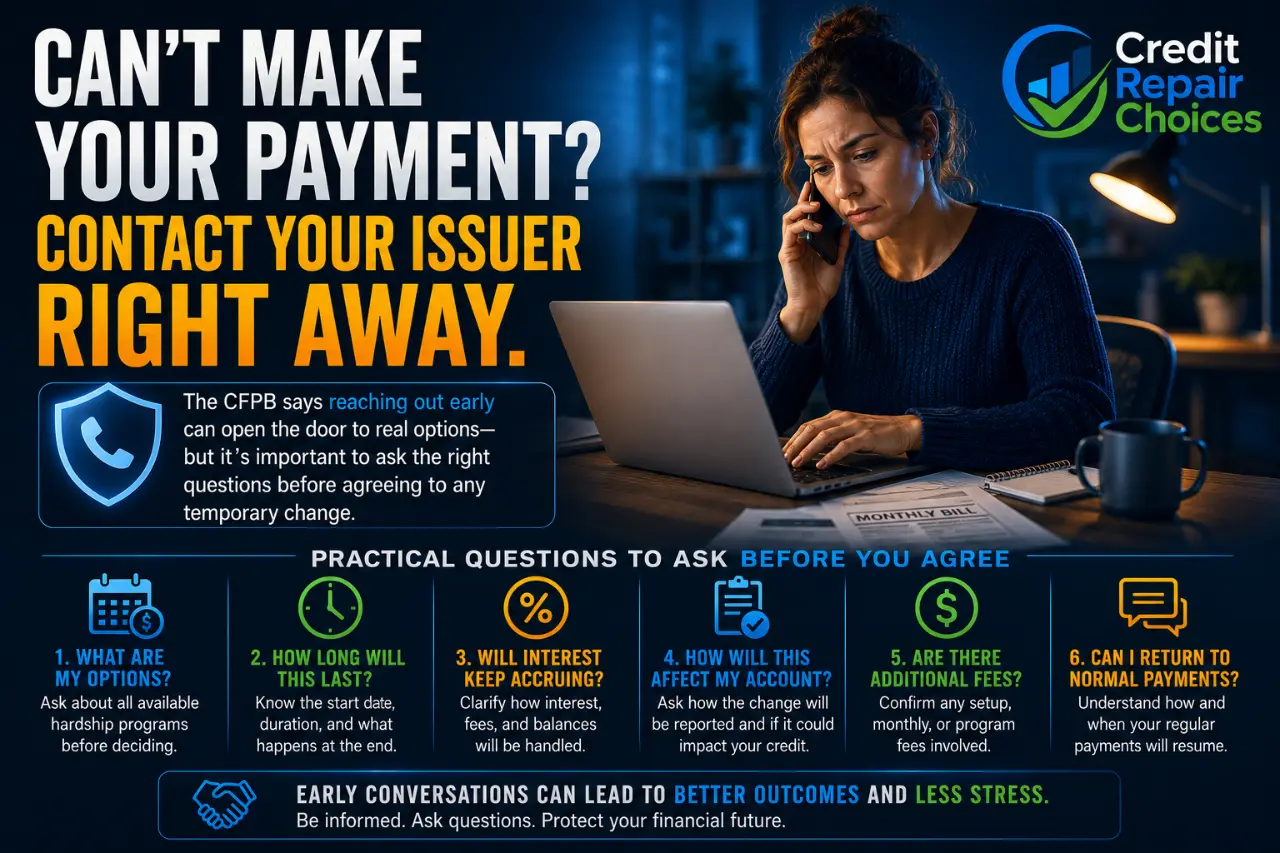
If you cannot make your credit card payment, the CFPB says to contact the issuer right away. These are the practical questions to ask before agreeing to a temporary hardship change.
Reviewed July 18, 2026 · 2 minute read
Listen to this article
If you cannot make your credit card payment, the Consumer Financial Protection Bureau says to contact your card company immediately. That advice matters because the earlier you ask about options, the more likely you are to discuss a workable change before the account slides further behind.
Why a hardship conversation needs specifics
When people hear “hardship program,” it can sound like a single standard solution. In practice, temporary relief can take different forms. A company may lower the required payment for a period, accept a partial-payment arrangement, or offer another short-term adjustment. The point is not to assume what the company means. The point is to ask direct questions before you agree.
Questions worth asking up front
What payment amount are you offering, and for how long?
Will interest continue to accrue at the same rate during the arrangement?
What happens when the temporary period ends?
Will the account be closed, suspended, or restricted while I am in the program?
Can you send the terms in writing before I rely on them?
What the CFPB wants consumers to do first
The CFPB says you should add up your income and expenses, look at what you can really afford, and then call the card company with a clear explanation. That preparation matters. A hardship request is easier to evaluate when you can state what payment you can make, how long you may need help, and when you expect your situation to improve.
Why this fits a debt-payoff strategy
A temporary hardship arrangement is not the same thing as a full payoff plan, but it can protect the account long enough for you to stabilize your budget and make a more realistic debt-reduction plan. The FTC’s debt guidance makes the same core point from another angle: contact creditors before the problem gets worse and do not wait for a collector to become the first person you talk to.
Bottom line
If a card company is willing to work with you, make sure you understand exactly what is changing, how long it lasts, and what the account will look like afterward. A helpful payment change should make the path clearer, not more confusing.
The supplied Cash App link currently offers a new eligible user $5 after sending $5, and CreditSoft may receive a $5 referral bonus. Here is what the official pages do and do not verify.
Short answer: Do not ignore the accounts, but do not assume every demand is accurate either. Ordinary letters and calls are not automatically illegal. Federal law prohibits harassment, abuse, deception, and unfair collection practices.…
Credit Repair Choices uses cookies.We use essential cookies for site features and optional tools to understand traffic, improve content, and measure campaigns.Cookie Policy


Join the conversation
Load Facebook comments to read and reply using your Facebook account.