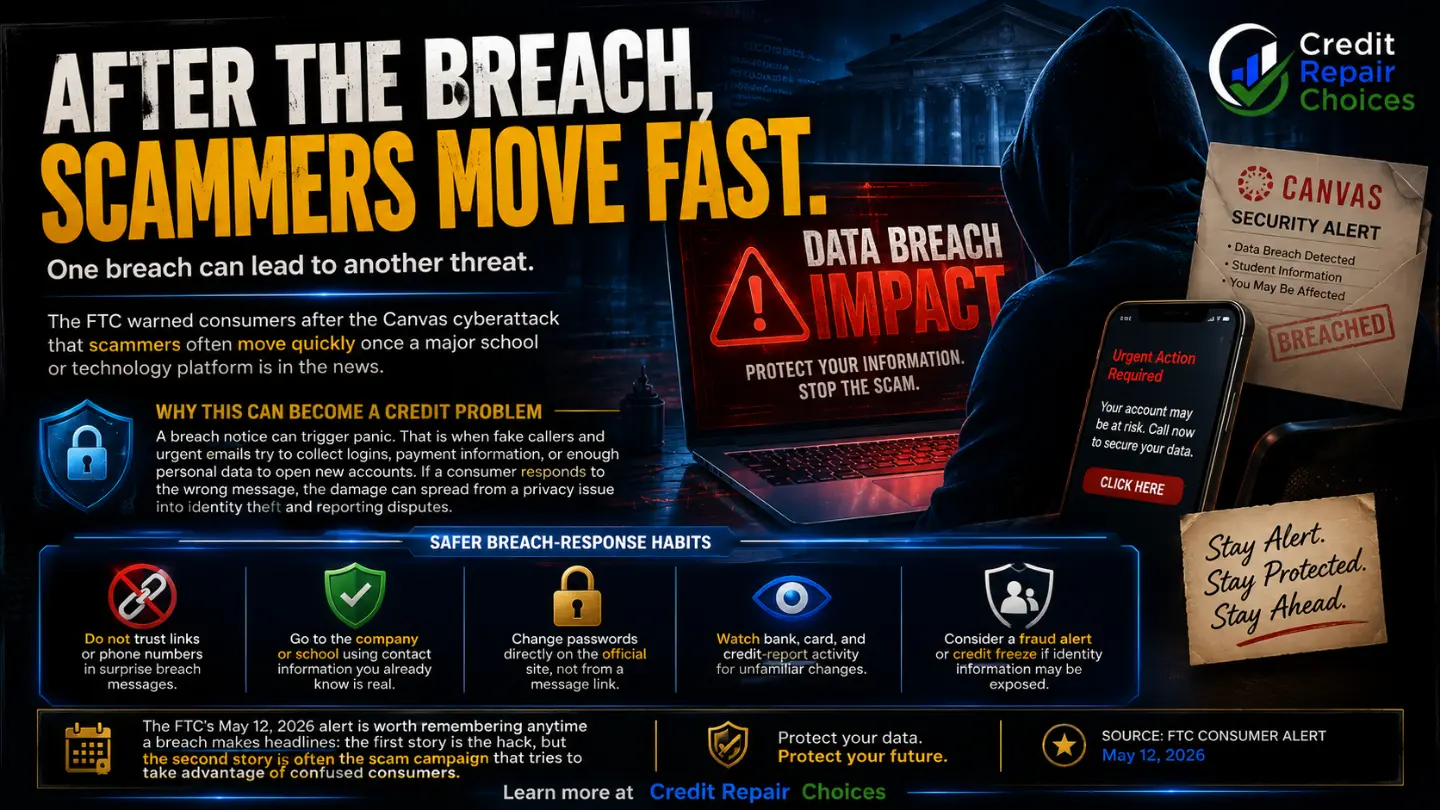
One of the most common patterns after a breach is not the breach itself. It is the rush of fake help messages that follow. The FTC warned consumers after the Canvas cyberattack that scammers often move quickly once a major school or technology platform is in the news.
Why this can turn into a credit problem
A breach notice can trigger panic. That is when fake callers and urgent emails try to collect logins, payment information, or enough personal data to open new accounts. If a consumer responds to the wrong message, the damage can spread from a privacy issue into identity theft and reporting disputes.
Safer breach-response habits
- Do not trust links or phone numbers inside surprise breach messages.
- Go to the company or school using contact information you already know is real.
- Change passwords directly on the official site, not from a message link.
- Watch bank, card, and credit-report activity for unfamiliar changes.
- Consider a fraud alert or credit freeze if identity information may be exposed.
The FTC’s May 12, 2026 alert is worth remembering anytime a breach makes headlines: the first story is the hack, but the second story is often the scam campaign that tries to take advantage of confused consumers.
Source: FTC Consumer Alert, May 12, 2026

Join the conversation
Load Facebook comments to read and reply using your Facebook account.