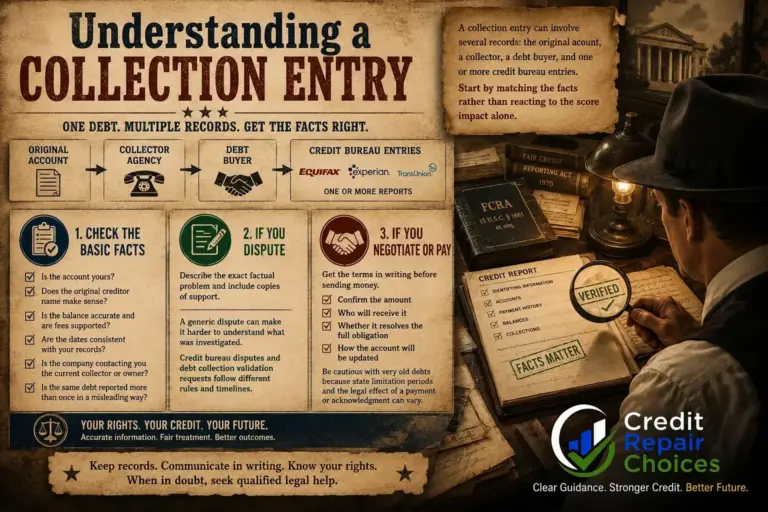
The FTC’s February 11, 2026 debt-collection alert put a simple checkpoint back in front of consumers: if a collector contacts you, do not treat the first demand as proof. Ask for the validation information, confirm the debt is actually yours, and slow the process down enough to compare the claim with your own records.
Why this is credit news
Debt collection activity often becomes a credit-report issue because unpaid accounts can be reported, disputed, sold, or pursued aggressively. A rushed payment on the wrong account can make things more confusing instead of cleaner, especially when a debt belongs to someone else, contains inaccurate amounts, or is being used as cover for a scam.
What the FTC highlighted
The agency’s alert emphasized that collectors generally must provide validation information including the collector’s name, the creditor’s name, the amount claimed, and information about the consumer’s rights. That matters because the first few days after contact are often when people feel the most pressure to act before they have checked anything.
What CRC readers should remember
- Ask for the details before you pay.
- Compare the claim against statements, prior notices, and credit reports.
- Treat threats, missing documentation, and pressure as warning signs to slow down.
The FTC’s February guidance was less about new law and more about consumer process, but that process is exactly what prevents many collection problems from turning into larger credit disputes.
Source: FTC Consumer Alert, February 11, 2026


Join the conversation
Load Facebook comments to read and reply using your Facebook account.