The tradeoffs hidden behind a smaller settlement amount.
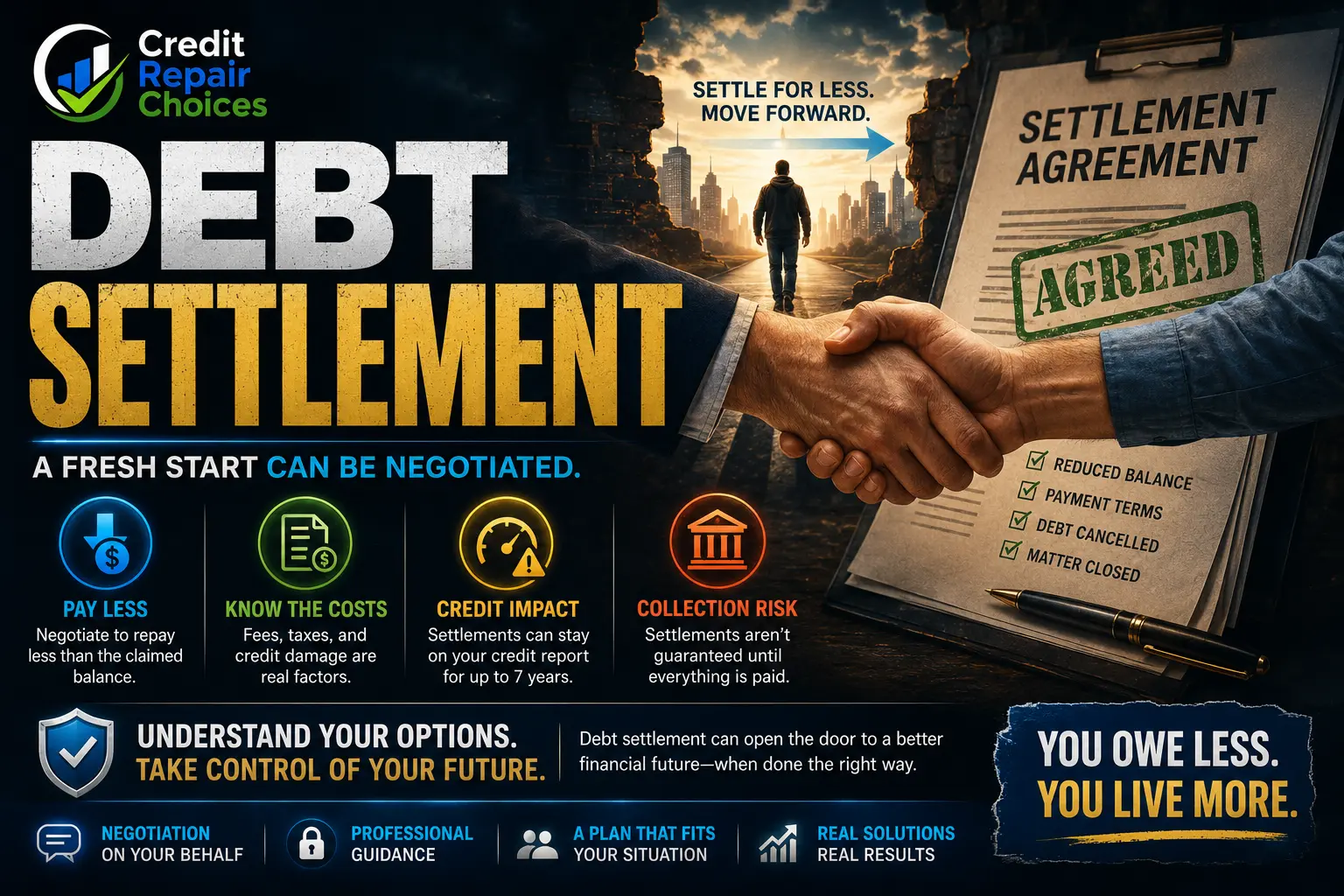
Debt settlement seeks an agreement to repay less than the claimed balance and can involve fees, taxes, credit damage, and collection risk.
Reviewed July 17, 2026 · 1 minute read
Listen to this article
Debt settlement seeks an agreement to repay less than the claimed balance and can involve fees, taxes, credit damage, and collection risk.
Debt settlement is a settlement negotiated with a debtor's unsecured creditor. Commonly, creditors agree to forgive a large part of the debt: perhaps around half, though results can vary widely. When settlements are finalized, the terms are put in writing. It is common that the debtor makes one lump-sum payment in exchange for the creditor agreeing that the debt is now cancelled and the matter closed. Some settlements are paid out over a number of months. In either case, as long as the debtor does what is agreed in the negotiation, no outstanding debt will appear on the former debtor's credit report.
Join the conversation
Load Facebook comments to read and reply using your Facebook account.
Credit card offers arrive constantly — mail, email, preapproved pitches. Comparing them systematically takes twenty minutes and can save you real money. Here is […]
Secured and unsecured are the two basic families of consumer loans, and the difference comes down to one thing: collateral. Understanding which type you […]
Join the conversation
Load Facebook comments to read and reply using your Facebook account.