If a debt collector contacts you, one of the first things to watch for is the validation notice. This is not just paperwork to ignore. It is part of the information a collector is generally required to give you early in the process so you can understand what debt they claim you owe and how to dispute it.
The CFPB explains that when a debt collector first contacts you about a debt, they generally must provide certain validation information during the initial communication or within five days after it. That information is important because it helps you compare the collector’s claim against your own records before you decide what to do next.
What the notice should include
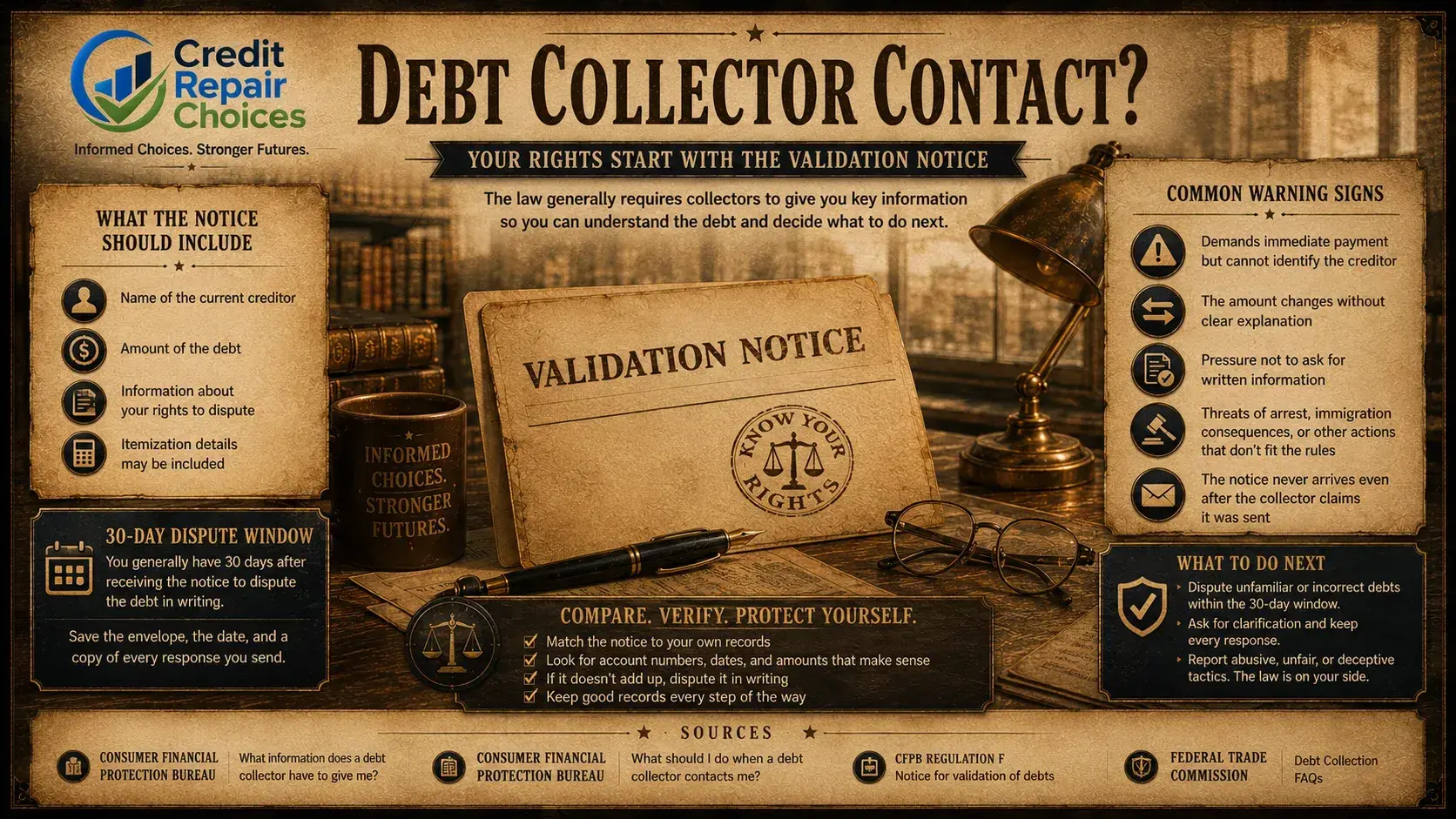
Under CFPB guidance and Regulation F, the validation information generally includes the name of the current creditor, the amount of the debt, and information about your rights to dispute it. Depending on the situation, it may also include itemization details that show how the amount was calculated.
At a practical level, you should be able to answer a few basic questions from the notice: who says the debt is owed, how much they say is owed, and what steps you can take if you think the information is wrong or incomplete.
Why the 30-day dispute window matters
The CFPB says that once you receive the validation information, you generally have 30 days to dispute the debt in writing. That does not mean your rights vanish after 30 days, but it does mean the early written dispute window can be important. If you think the account is not yours, the amount is wrong, or key information is missing, waiting can make the process harder.
That is why it helps to save the envelope, the date you received the notice, and a copy of any written response you send. Keep screenshots or PDFs if the contact came electronically. Good records can matter if the issue grows into a larger dispute later.
What to compare against your own records
Match the notice to your records before you pay or admit anything. Look at old statements, account numbers, collection letters, email notices, and credit reports. Check whether the creditor name looks familiar and whether the amount lines up with what you expected. If the debt involves medical bills, utilities, or an old credit card, make sure the dates and ownership trail make sense.
If you cannot connect the notice to any account you recognize, slow down. The CFPB specifically notes that if a collector does not or cannot provide the required validation information, that can be a warning sign. In some cases, it may point to sloppy records. In others, it may suggest a scam.
Common warning signs
- The caller demands immediate payment but cannot clearly identify the creditor.
- The amount changes from one conversation to the next without explanation.
- You are pressured not to ask for written information.
- The collector threatens arrest, immigration consequences, or other actions that do not fit normal debt collection rules.
- The notice never arrives even after the collector claims it was sent.
What to do next
If the debt appears unfamiliar or incorrect, send a written dispute within the 30-day period described by the CFPB. If the debt seems familiar but the numbers are confusing, ask for clarification and keep every response. If the collector is using abusive, unfair, or deceptive tactics, the FTC notes that the Fair Debt Collection Practices Act limits that conduct.
The key is not to treat the validation notice as a formality. It is one of the first checkpoints where you can compare a collector’s claim to your own records and decide whether the account looks accurate, incomplete, or suspicious.
Sources
- CFPB: What information does a debt collector have to give me?
- CFPB: What should I do when a debt collector contacts me?
- CFPB Regulation F: Notice for validation of debts
- FTC: Debt Collection FAQs

Join the conversation
Load Facebook comments to read and reply using your Facebook account.