
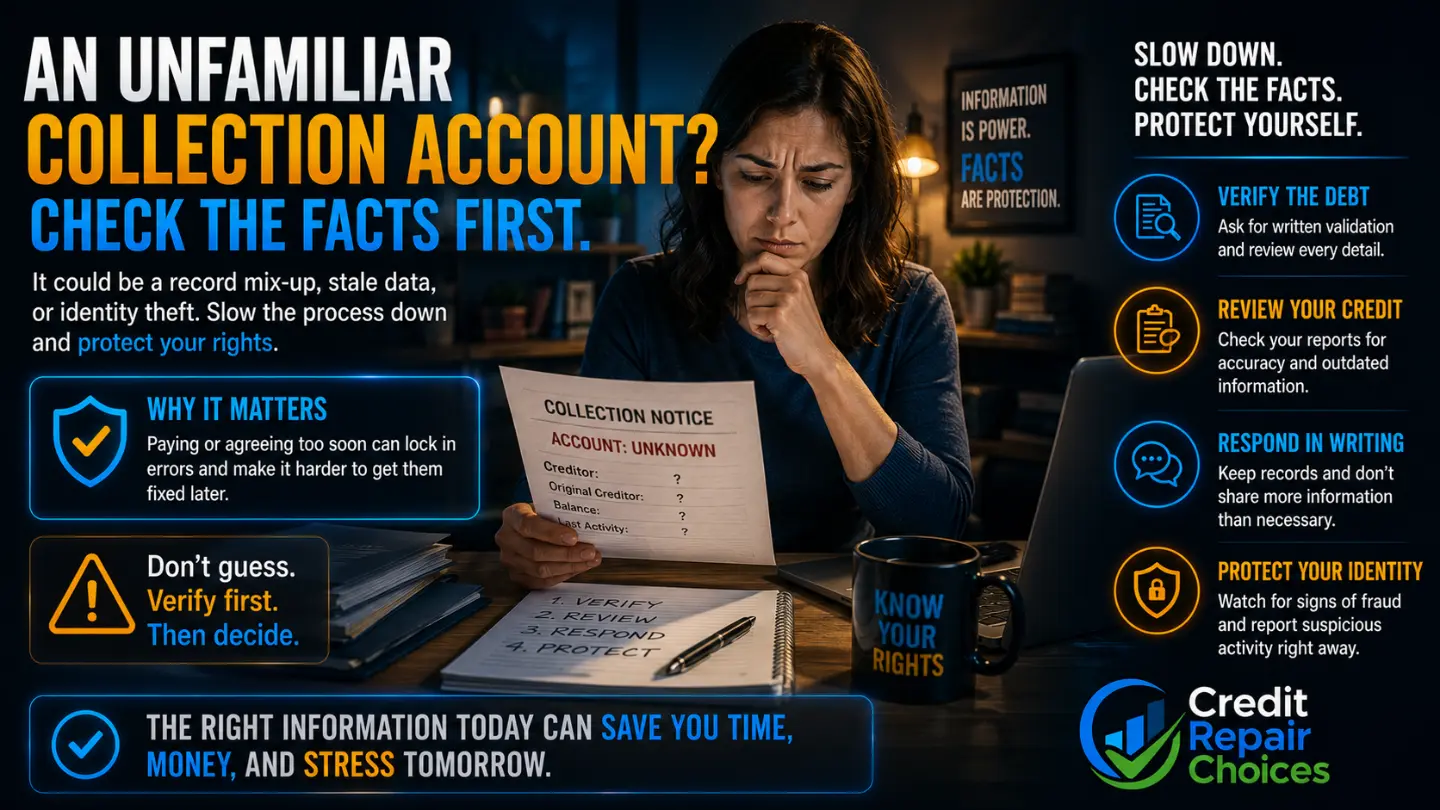
Getting a collection call about an account you do not recognize can be alarming, especially if the caller pushes for immediate payment. But an unfamiliar account does not automatically prove the debt is valid. It may reflect a bad record, a mixed file, outdated information, or identity theft. The first goal is to slow the process down enough to compare the claim against your own records.
The CFPB advises consumers that a collector generally must provide validation information that includes the creditor’s name, the amount owed, and how to dispute the debt. That means you do not have to rely on a fast phone call alone. Written information matters.
Start by asking for the validation information
If the account is unfamiliar, look for the written validation information before you assume the debt is yours. Save the collector’s name, phone number, mailing address, email address, and the date of contact. If the collector has already sent a letter or email, keep a copy of it. If not, note exactly what they said the account was and who they claimed the original creditor was.
The CFPB notes that if a collector does not or cannot provide the required validation information, that can be a warning sign. It does not automatically tell you what the problem is, but it is a reason to move carefully.
Compare the claim to your own records
Before making any payment, compare the account details to your credit reports, old statements, and prior correspondence. Ask yourself whether the creditor name is familiar, whether you ever lived at the address associated with the account, and whether the timeline makes sense. A small mismatch can matter. Sometimes the account is real but belongs to someone else with a similar name. Sometimes the account is tied to fraud.
Think about identity theft if the account makes no sense
If the account is completely unfamiliar and you cannot connect it to your records, identity theft is one possibility to consider. The FTC’s identity theft resources can help consumers think through next steps when an account appears that they did not open. That does not mean every unfamiliar collection notice is identity theft, but it does mean you should not brush the issue aside just because a collector sounds confident.
Do not let urgency replace verification
Collectors and scammers both rely on pressure. If the message is “pay right now or else,” that is your cue to slow down. A legitimate debt issue may still need attention, but paying first and sorting it out later can be hard to unwind if the account turns out to be inaccurate or fraudulent.
Keep copies of every letter, email, screenshot, and voicemail. If you send a written dispute, keep a copy of that too. Good documentation helps whether the problem is a reporting error, a mixed identity, or suspected identity theft.
When to escalate
If the collector continues to press for payment without giving clear information, or if the account appears on your credit reports and you still do not recognize it, the next step may be to dispute the issue formally and keep your records organized. The important thing is to stay factual: what account is being claimed, what records you reviewed, and what information does not match.
Bottom line
An unfamiliar collection account is a reason to verify, not panic. Ask for the written information, compare it to your records, and treat missing or inconsistent details as a sign to slow down instead of a reason to pay faster.
Sources
- CFPB: What should I do when a debt collector contacts me?
- CFPB: Debt collection
- FTC: Debt Collection FAQs
- FTC: Identity theft

Join the conversation
Load Facebook comments to read and reply using your Facebook account.