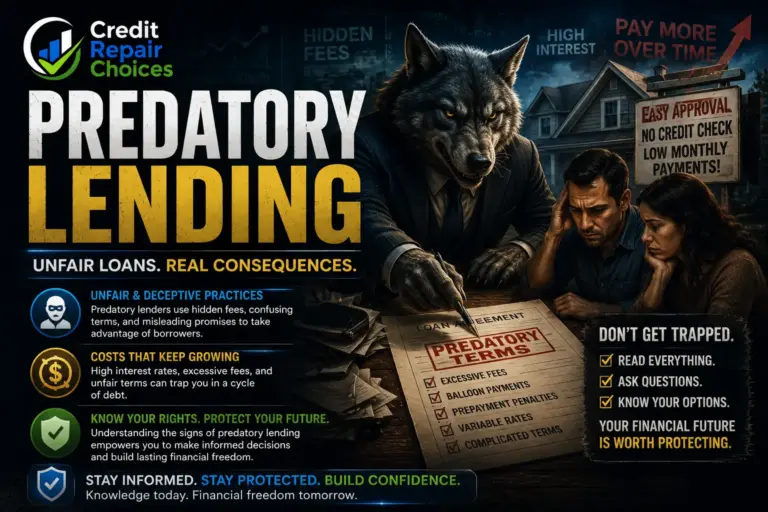
Warning signs that borrowing terms deserve a closer look.
Predatory lending describes unfair or abusive lending practices that can obscure costs or exploit borrowers.
Credit Repair Choices
Predatory lending describes unfair or abusive lending practices that can obscure costs or exploit borrowers.
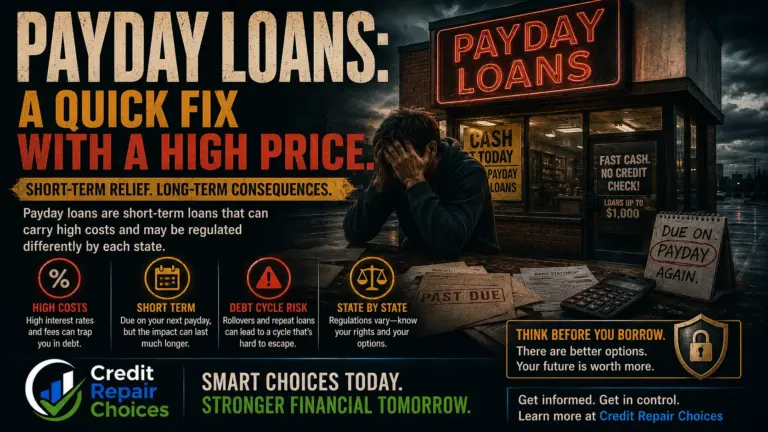
Payday loans are short-term loans that can carry high costs and may be regulated differently by each state.
The CFPB lists closed accounts reported as open as a common credit report error. Here is why that detail matters and what records to gather before disputing it.
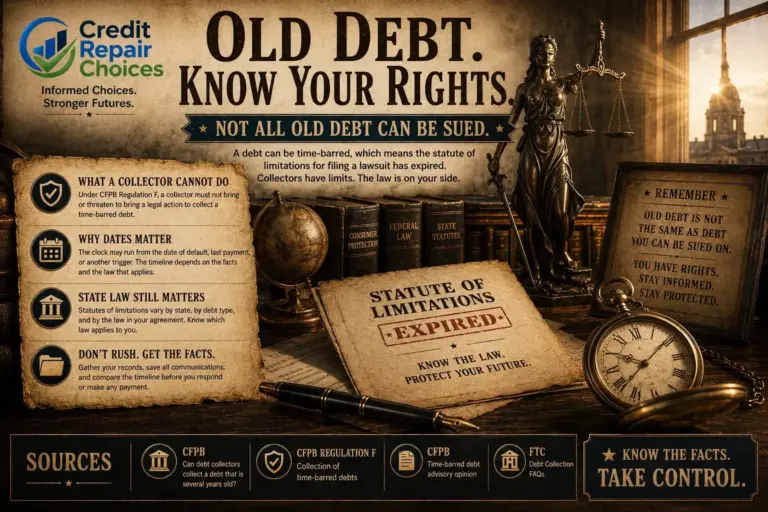
Collectors may still contact consumers about old debt, but there are important limits. Here is what “time-barred” means, what collectors cannot do, and why dates and state law matter.
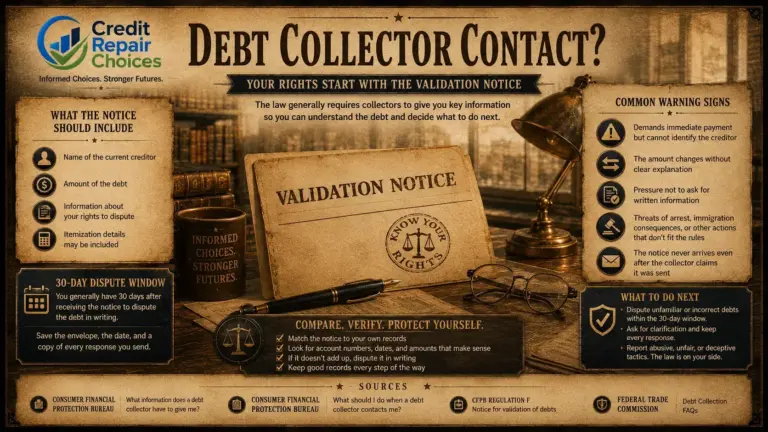
A debt collector usually has to give validation information early in the process. Here is what to look for, what the 30-day window means, and when missing information can be a warning sign.
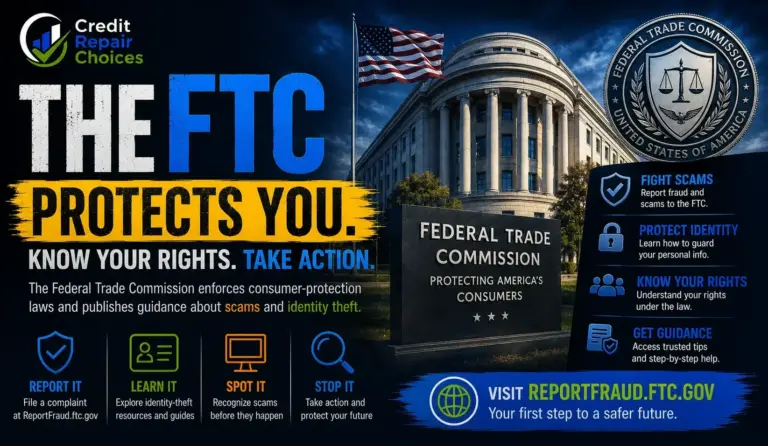
The Federal Trade Commission enforces consumer-protection laws and publishes guidance about scams and identity theft.
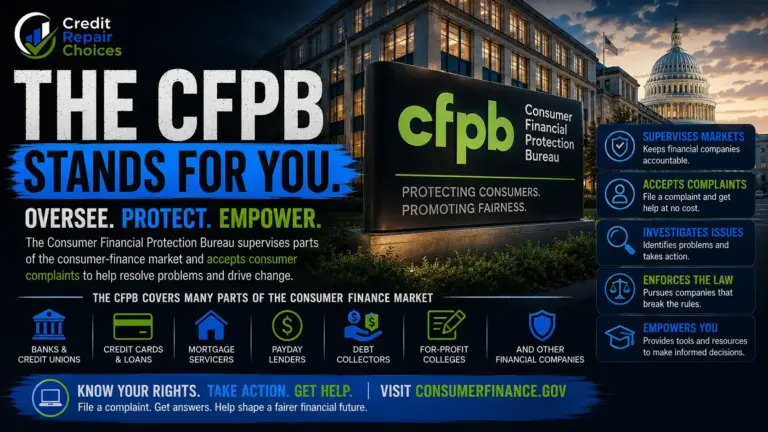
The Consumer Financial Protection Bureau supervises parts of the consumer-finance market and accepts consumer complaints.
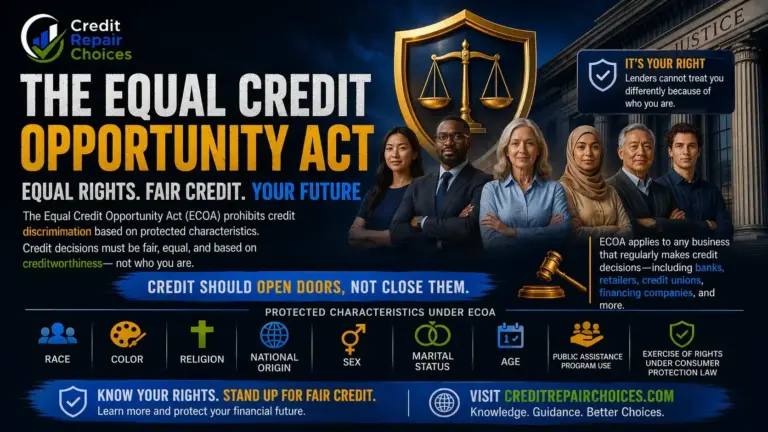
The Equal Credit Opportunity Act prohibits credit discrimination based on protected characteristics.
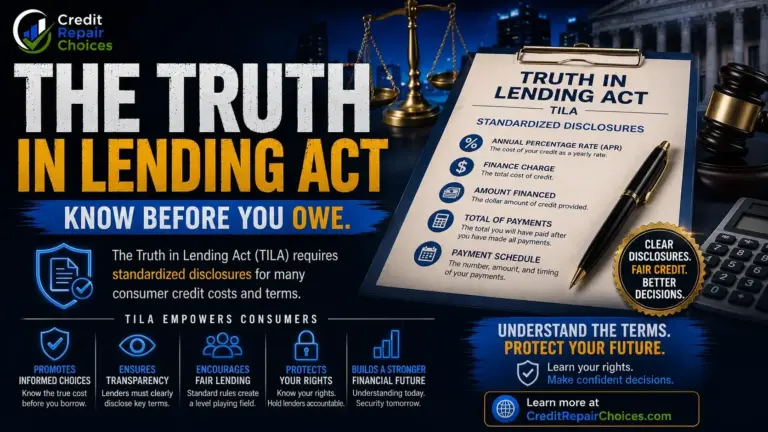
The Truth in Lending Act requires standardized disclosures for many consumer credit costs and terms.
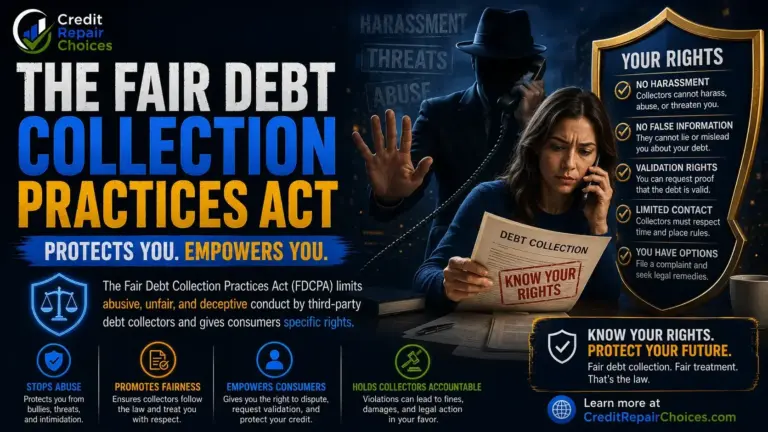
The Fair Debt Collection Practices Act limits certain conduct by third-party debt collectors and gives consumers specific rights.