
What to Know About Payment History Weight Before You Act
The Heaviest Factor Payment history is the single largest ingredient in both FICO and VantageScore models — roughly 35 percent of a FICO score. […]
Credit Repair Choices
Get practical guidance for reviewing your credit, resolving problems, paying down debt, and protecting your rights. Explore your options or compare verified professionals when you want help.
Latest
The Heaviest Factor Payment history is the single largest ingredient in both FICO and VantageScore models — roughly 35 percent of a FICO score. […]
Mistake 1: Thinking Mix Matters More Than It Does Credit mix — having different types of accounts, like revolving credit and installment loans — […]
Three Bureaus, Three Reports Equifax, Experian, and TransUnion each maintain their own credit report on you. They are independent companies, and while the reports […]
Step 1: Learn the Standard Ranges Both FICO and VantageScore use a 300-to-850 scale. While lenders set their own cutoffs, the commonly published tiers […]
The Basic Difference Every time someone looks at your credit report, it is one of two kinds of pull. A hard pull — also […]
Will This Application Trigger a Hard Inquiry? This is the first question to ask any time you apply for credit — a card, a […]
Mistake 1: Thinking Zero Balances Everywhere Is the Goal Some people pay every card to zero and close the month with no reported balances […]
What Utilization Means Credit utilization is the share of your available revolving credit that you are currently using. If you have a $5,000 credit […]
Reader questions
Send it privately. We research useful questions, remove identifying details, and turn approved answers into practical guides for everyone.
Free calculators
Credit news watch
We’re opening a dedicated desk for CFPB and FTC actions, credit-reporting law changes, identity-theft developments, and major data breaches that affect fraud risk, freezes, alerts, or dispute strategy.
Topic desk
Correct errors, rebuild habits, and spot claims that do not hold up.
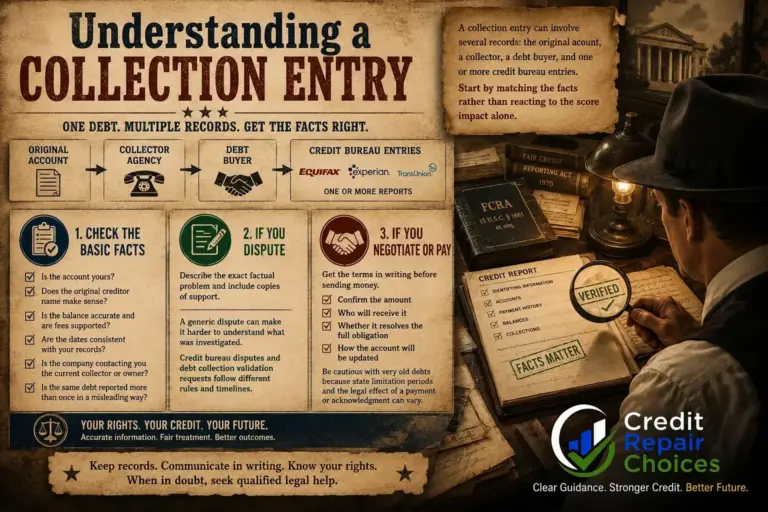
Before paying or disputing a collection, verify ownership, amount, dates, current collector, and how any agreement will be documented.
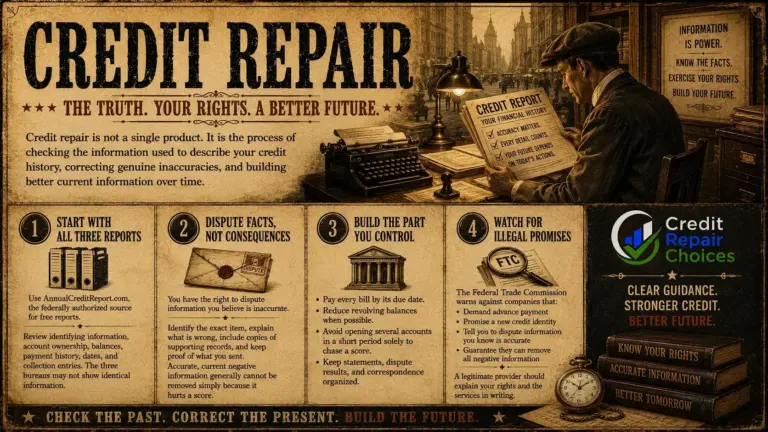
Real credit repair starts with accurate reports, documented disputes, current payments, and time. It does not require a secret loophole.
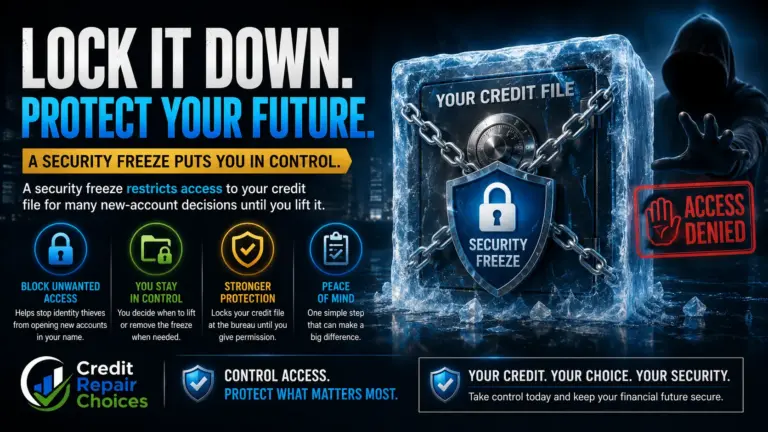
A security freeze restricts access to a credit file for many new-account decisions until the consumer lifts it.
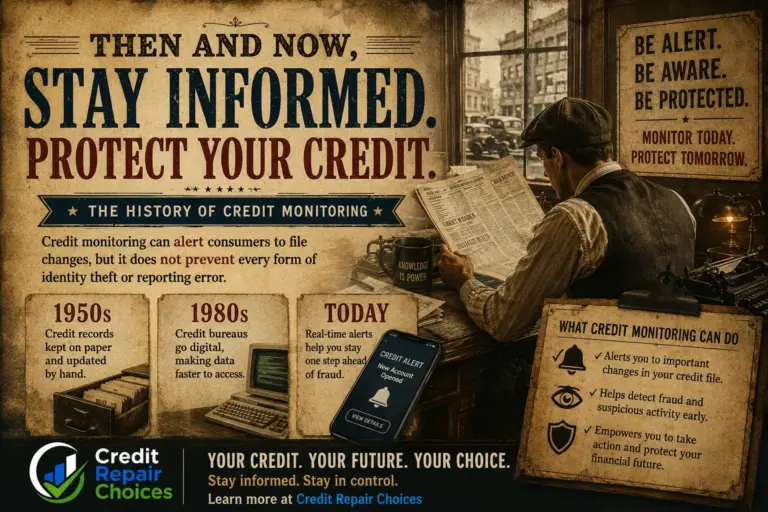
Credit monitoring can alert consumers to file changes, but it does not prevent every form of identity theft or reporting error.
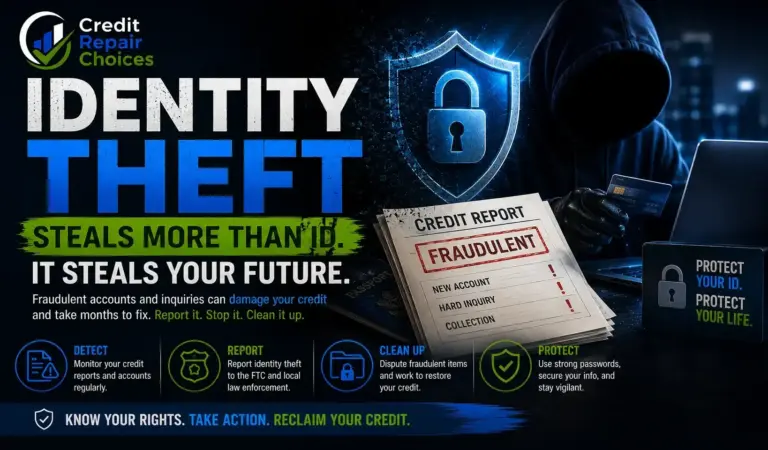
Identity theft can create fraudulent accounts and inquiries that require both fraud reporting and credit-file cleanup.
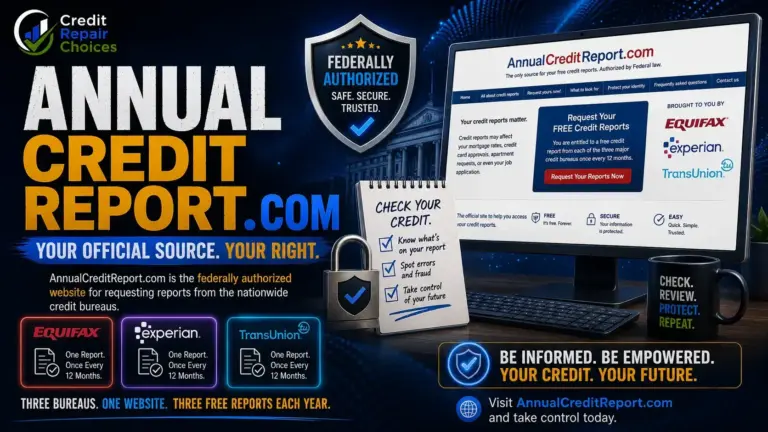
AnnualCreditReport.com is the federally authorized website for requesting reports from the nationwide credit bureaus.
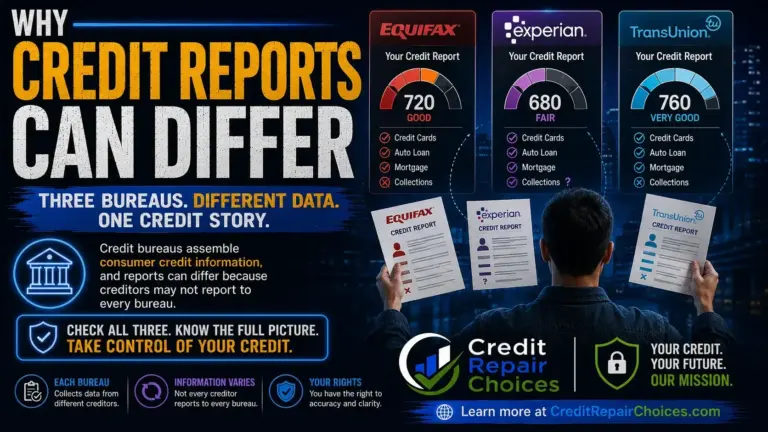
Credit bureaus assemble consumer credit information, and reports can differ because creditors may not report to every bureau.
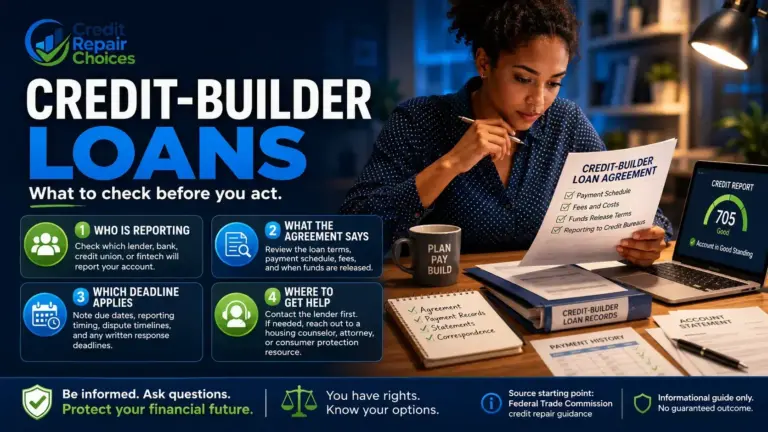
A practical guide to credit-builder loans, the records to check, and the next steps to consider.
Topic desk
Read each section, document inaccuracies, and keep a paper trail.
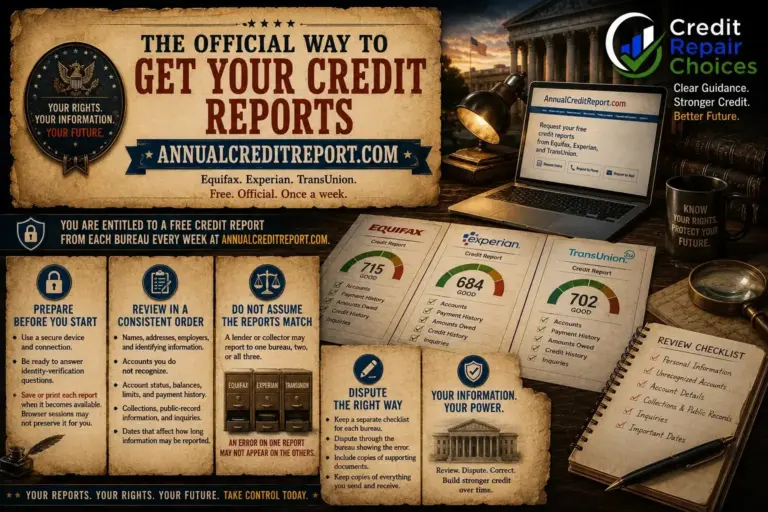
Use the federally authorized source, save each report, and check the details bureau by bureau.
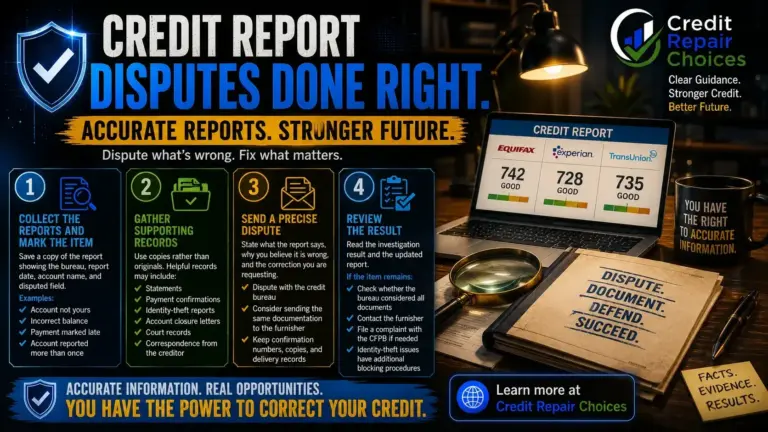
A useful dispute identifies a specific factual error, includes support, and creates a record you can follow.
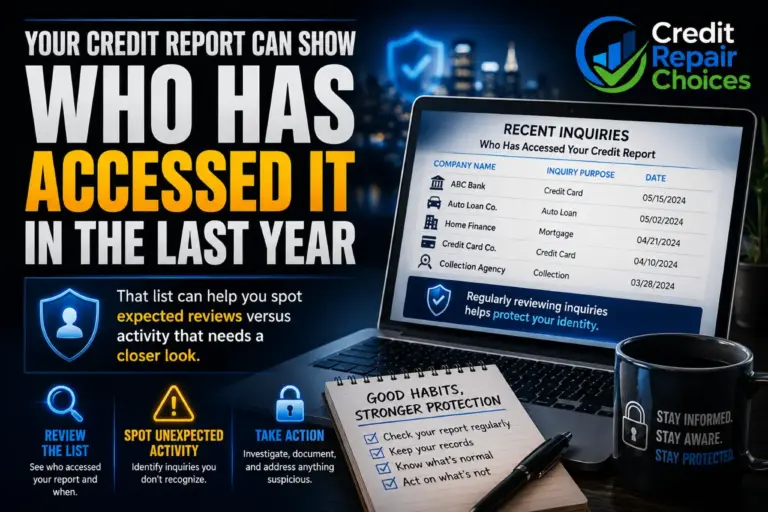
Your credit report can show who has accessed it in the last year, and that list can help you spot expected reviews versus activity that needs a closer look.
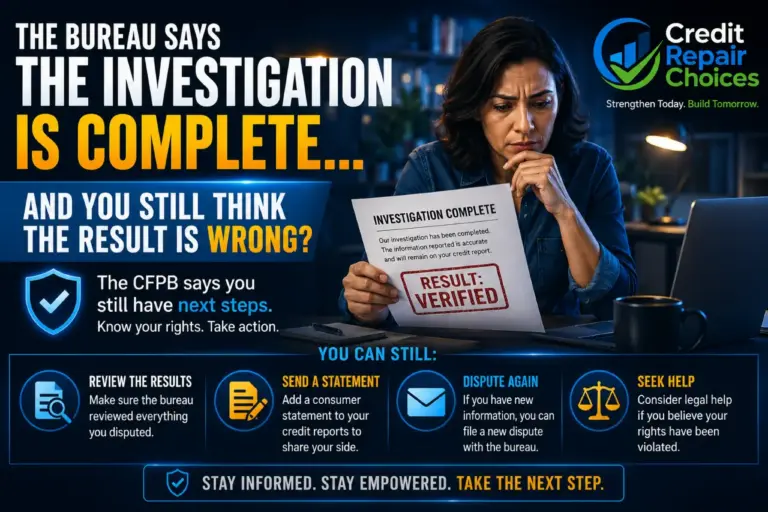
If the bureau says the investigation is complete and you still think the result is wrong, the CFPB says you still have next steps.

A practical list of the most common credit report errors the CFPB says consumers should check before they send a dispute.

A practical guide to free credit report access, the records to check, and the next steps to consider.
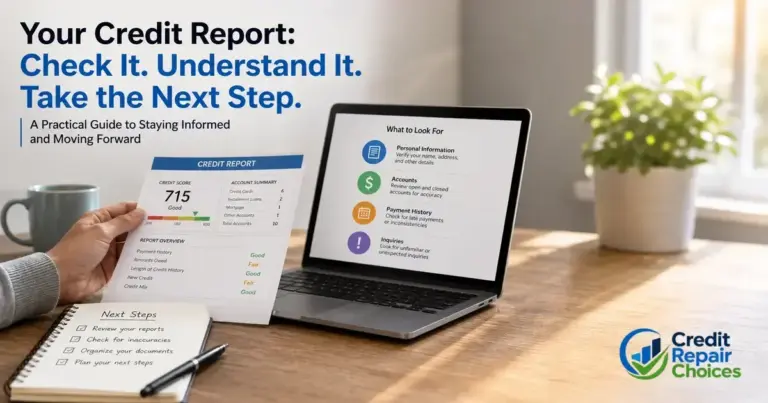
A practical guide to free credit report access, the records to check, and the next steps to consider.
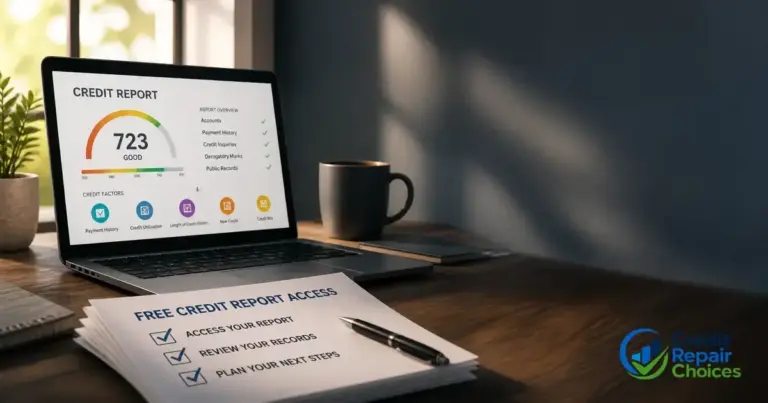
A practical guide to free credit report access, the records to check, and the next steps to consider.
Topic desk
Understand the factors without chasing a magic number or trick.
A practical guide to credit limit increases, the records to check, and the next steps to consider.
A practical guide to closing old credit cards, the records to check, and the next steps to consider.
A practical guide to credit mix, the records to check, and the next steps to consider.

A practical guide to score differences between apps, the records to check, and the next steps to consider.

A practical guide to score differences between apps, the records to check, and the next steps to consider.
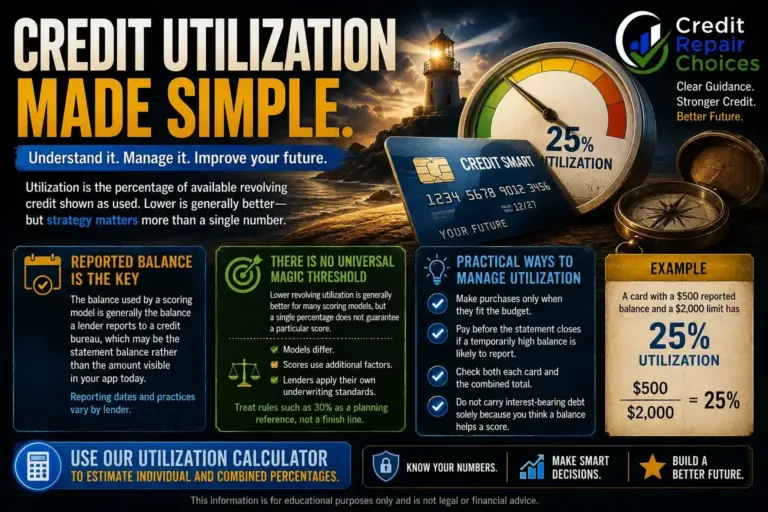
Credit utilization compares revolving balances with limits. Both individual cards and the combined picture can matter.
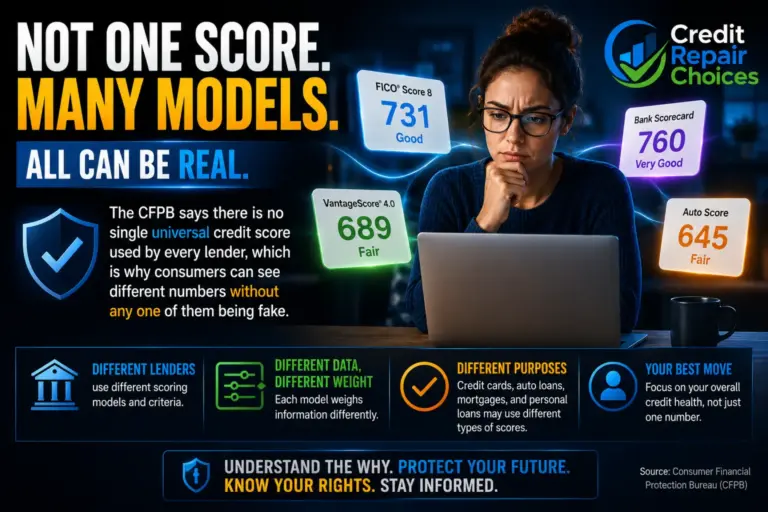
The CFPB says there is no single universal credit score used by every lender, which is why consumers can see different numbers without any one of them being fake.
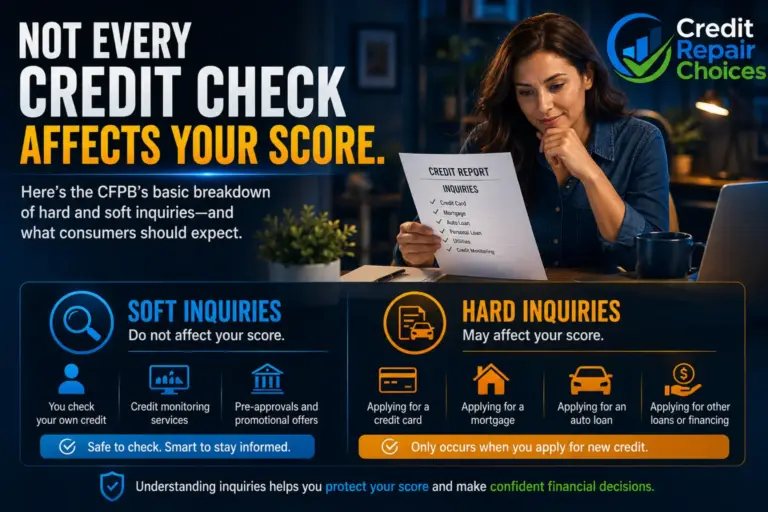
Not every credit check affects your score. Here is the CFPB’s basic breakdown of hard and soft inquiries and what consumers should expect.
Topic desk
Track CFPB, law, identity-theft, and data-breach developments that affect credit decisions.
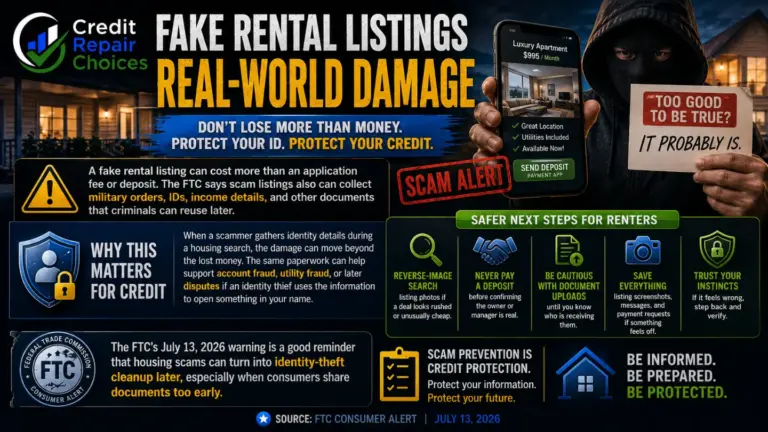
The FTC says rental scams do not just steal deposits. They can also collect enough personal data to create longer fraud and credit-report headaches.
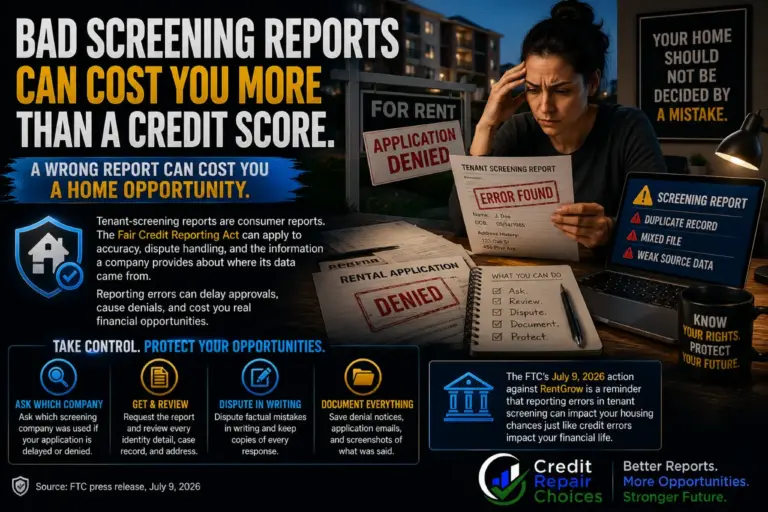
The FTC says tenant-screening reports still have to meet Fair Credit Reporting Act standards for accuracy and source disclosures.
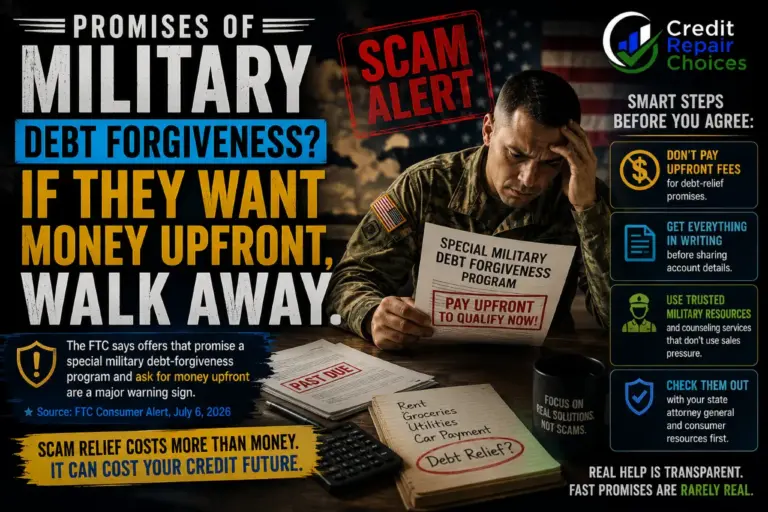
The FTC says scammers are using fake military debt-forgiveness promises to collect fees and personal information from service members and veterans.
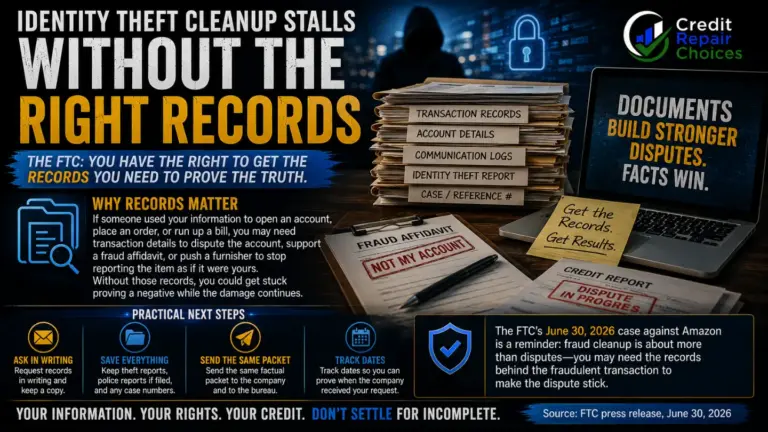
The FTC says companies cannot ignore Fair Credit Reporting Act duties when identity theft victims ask for transaction records tied to fraud.
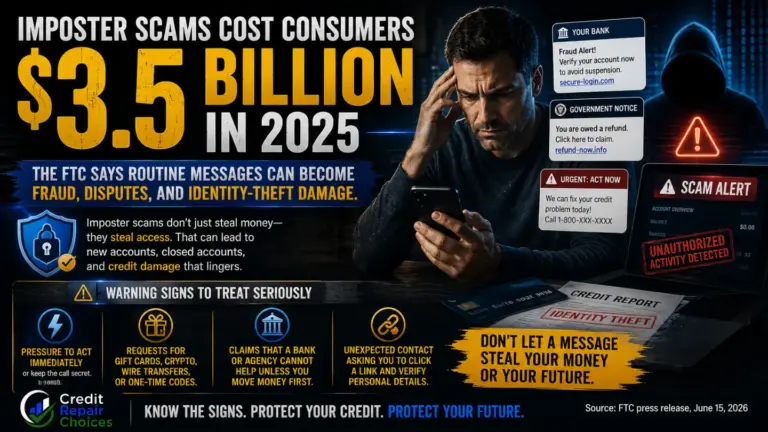
New FTC data show imposter scams remain a huge threat, especially when criminals pose as banks, government agencies, or familiar brands.
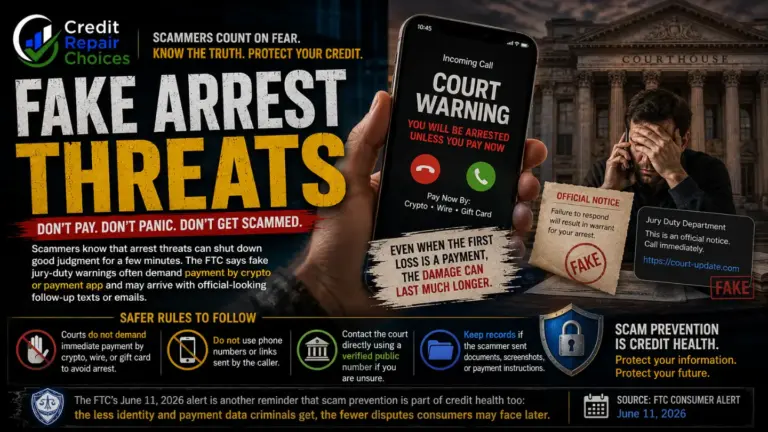
The FTC warns that fake arrest threats tied to jury duty can push people into payment-app losses and identity exposure before they can think clearly.
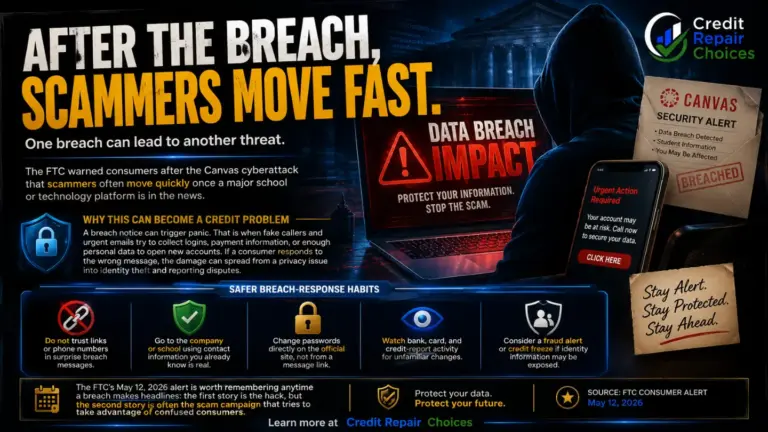
The FTC warns that after a breach headline, scam texts, calls, and emails often arrive before consumers have solid facts.
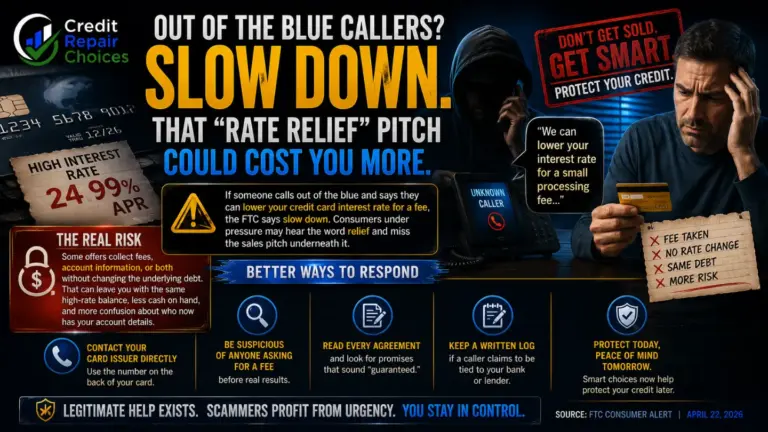
The FTC says cold calls offering quick interest-rate relief often depend on fees, vague promises, and pressure that do not solve the real debt problem.
Topic desk
Compare practical ways to reduce balances and interest.

A practical guide to building a starter emergency fund, the records to check, and the next steps to consider.

A practical guide to building a starter emergency fund, the records to check, and the next steps to consider.

A practical guide to past-due utility bills, the records to check, and the next steps to consider.
A practical guide to past-due utility bills, the records to check, and the next steps to consider.
A practical guide to past-due utility bills, the records to check, and the next steps to consider.
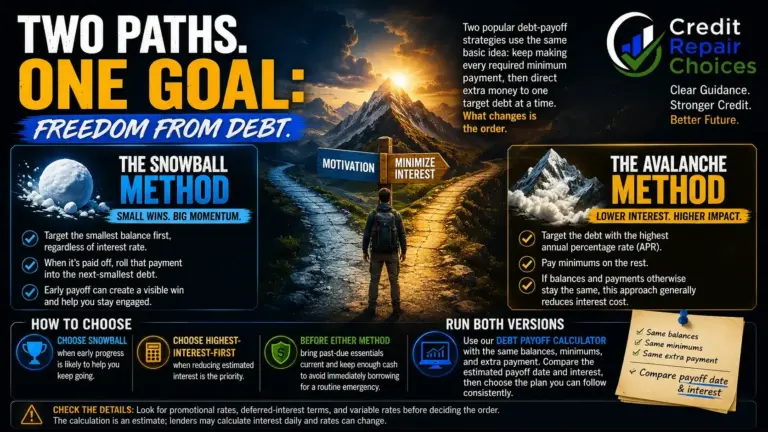
The snowball method targets the smallest balance. The avalanche method targets the highest interest rate. Here is how to compare them without pretending one method fits everyone.
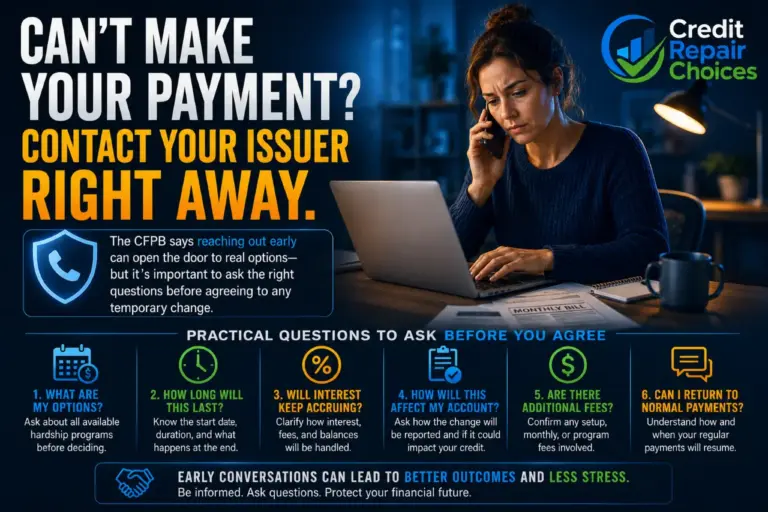
If you cannot make your credit card payment, the CFPB says to contact the issuer right away. These are the practical questions to ask before agreeing to a temporary hardship change.
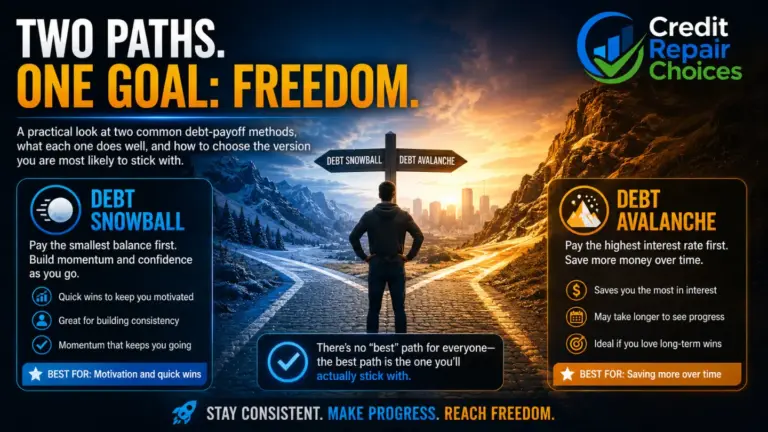
A practical look at two common debt-payoff methods, what each one does well, and how to choose the version you are most likely to stick with.
Topic desk
Know the warning signs, federal protections, and complaint paths.
A practical guide to debt validation notices, the records to check, and the next steps to consider.
A practical guide to debt validation notices, the records to check, and the next steps to consider.
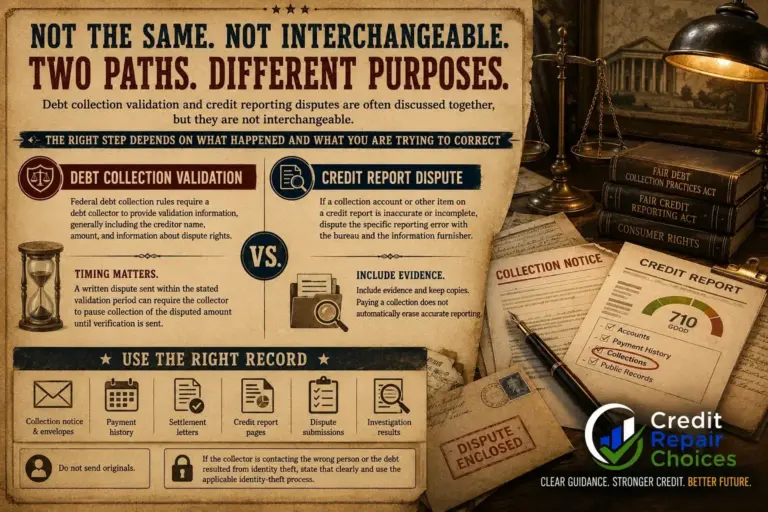
A debt validation request addresses collection information. A credit report dispute addresses information appearing on a consumer report.
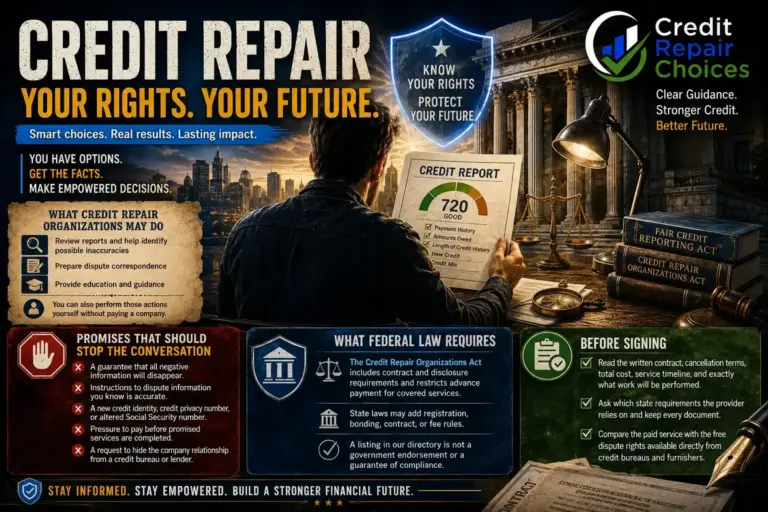
A company can help organize and send legitimate disputes. It cannot legally create a new identity or guarantee the removal of accurate information.
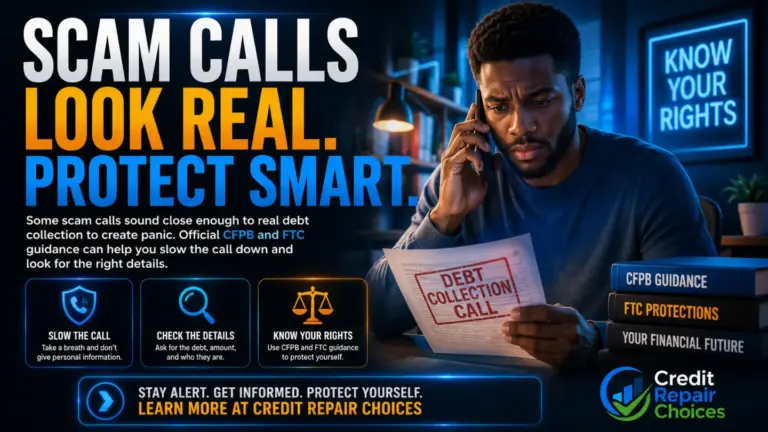
Some scam calls sound close enough to real debt collection to create panic. Official CFPB and FTC guidance can help you slow the call down and look for the right details.
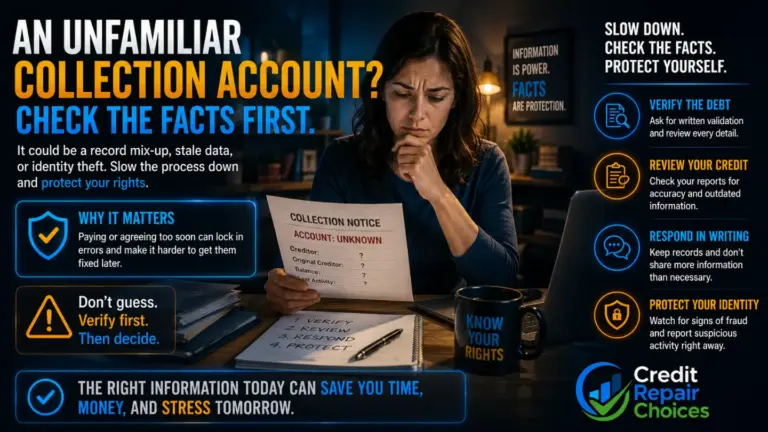
An unfamiliar collection account can point to a record mix-up, stale data, or identity theft. Here is how to slow the process down and check the facts before you pay or agree to anything.
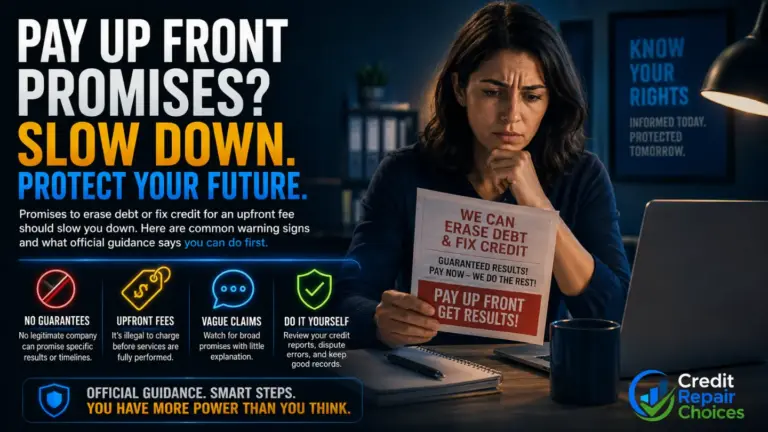
Promises to erase debt or fix credit for an upfront fee should slow you down. Here are common warning signs and what official guidance says consumers can do for themselves first.
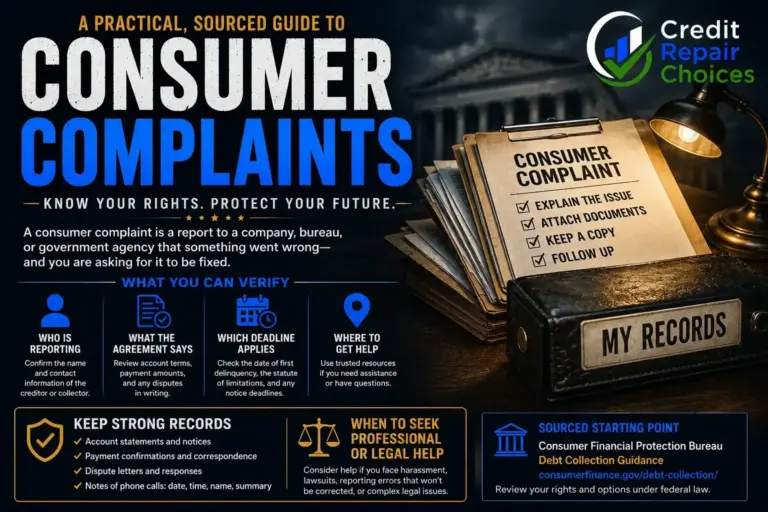
A practical guide to consumer complaints, the records to check, and the next steps to consider.
Professional help
See what an organization submitted for review, where it says it serves consumers, and which questions to ask before signing.